Quick takeaways
- A Seth Godin quote pinned to a Notion board is not a marketing strategy.
- Most of This Is Marketing orbits one real idea: shrink your audience until you can actually serve it.
- “People like us do things like this” is the one phrase worth memorizing, but only if you know what to do with it on Monday morning.
- Skip the quote collages. Read the chapter on the smallest viable market twice, with a real product in front of you.
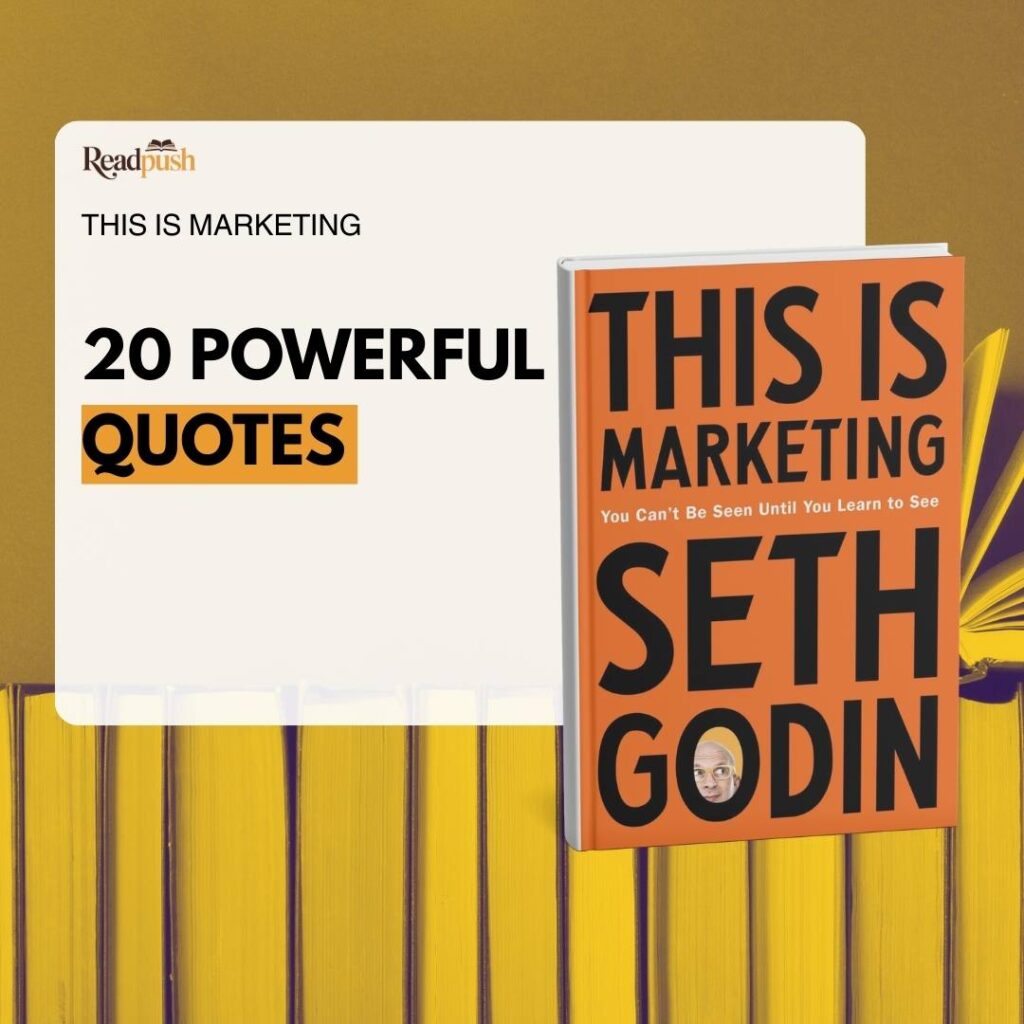
Look, I’ve read most of the LinkedIn carousels. The ones with the soft-focus headshot, the Helvetica quote, the “thoughts?” at the bottom. About a third of them are Seth Godin lines yanked out of This Is Marketing, and I get why. Godin is one of the most quotable business writers alive. The man writes like a fortune cookie with an MBA.
Here’s the thing nobody says about quote collages: they are the opposite of what the book is actually trying to teach you. Godin’s whole argument is that marketing is the slow, generous, specific work of serving a tiny audience. The quote collage is the fast, lazy, generic work of decorating your feed. If you walked away from This Is Marketing with twenty highlights and zero changes to how you sell things, you read the book wrong. So let’s not do another listicle. Let’s do the thing the book is actually asking for, which is to figure out what it means.
What the book is actually saying
Strip away the parables about Penguin Magic and the Vandellas, and Godin is making three claims that hang together. One: marketing is making change happen, not making noise. Two: you make change for the smallest group that will care, not the biggest you can reach. Three: people decide based on identity, not features, and the way identity works can be summed up in six words. The line is people like us do things like this, and if there’s one phrase from this book worth keeping, it’s that one.
That’s the book in one paragraph. The rest is Godin walking around the same idea from different angles, which he’s good at, and occasionally repeating himself, which he also is. Some readers will get more from the long version. Some won’t. Both are fine. There’s a solid full summary of This Is Marketing if you want the whole thing laid out before you decide whether to read it.
The smallest viable market: the one idea worth the cover price
If you only take one concept from the book and apply it, take this one. Godin’s argument is that most marketing fails because the marketer is trying to talk to “everyone,” and “everyone” doesn’t exist. The smallest viable market is the smallest group of people you could serve so well that the work is still worth doing. Pick those people. Pick them specifically. Write down who they are not.
I spent three years of my sales career failing this test in slow motion. Selling project management software to “small business owners,” which is a category that includes a yoga studio in Portland and a sheet metal shop in Ohio, and there is no message that resonates with both of those people at the same time. The day I switched to selling to a single, very specific kind of agency owner, my close rate roughly tripled. That isn’t because I got better at sales. It’s because I finally got specific about who I was selling to.
“People like us do things like this”
This is the line everyone quotes, and it’s the line most worth understanding. Godin’s claim is that human beings make decisions less from analysis and more from tribal identity. We do not buy the running shoe with the best biomechanical reviews. We buy the running shoe that the kind of person we want to be is wearing. We do not switch insurance providers because of a 4 percent premium savings. We switch when the new one feels like something a person we respect would do.
This isn’t Godin’s idea, originally. It’s downstream of a half-century of identity-based behavioral research, going back at least to Henri Tajfel’s social identity theory in the 1970s. What Godin does is compress the academic work into a phrase a marketer can use on a Monday morning, and that’s worth something.
The application is the part you have to figure out yourself. Who, specifically, is your audience? What do they already believe? What story would let them say, out loud, “yes, this is the kind of thing I do”? If you can answer those three, you can write the marketing. If you can’t, no quote collage will save you.
|
This Is Marketing Three ideas. Everything else is commentary.
|
||||||||||
Where Godin loses me
Time for the contrarian part of the article, since you’re getting it from me.
Godin’s framing of marketing as a generous, helpful act in service of someone else’s problem is true and also a little convenient. It’s true because the best marketing does help people. It’s convenient because it lets marketers walk around feeling like missionaries. Most marketing, including most marketing that follows Godin’s rules, is people selling other people products that the buyers slightly want, at prices that include a healthy profit margin. That’s fine. That’s commerce. We don’t have to dress it up as a calling.
The other place the book wobbles is tactics. Godin is allergic to specifics, on purpose. He’ll tell you to find your tribe and earn permission, but he won’t tell you whether to spend the next ninety days on email or on TikTok. There’s a real reason for that — tactics rot, principles last — but if you’re a founder reading this hoping for something you can do tomorrow, you’ll close it with more vocabulary and the same to-do list. Pair it with something tactical. Robert Cialdini’s Influence, or April Dunford’s Obviously Awesome, depending on your actual problem. The 1-Page Marketing Plan is a decent tactical complement if you want a system, not just a philosophy.
Common misconceptions about This Is Marketing
It’s a how-to book. It isn’t. It’s a how-to-think-about-it book. The difference matters. If you finish it expecting a campaign template, you’ll be frustrated. If you finish it expecting a different mental model of what marketing actually is, you might get one.
“Smallest viable market” means small revenue. No. It means a small audience you serve so well that they pay you, talk about you, and bring more people like them. Patagonia’s smallest viable market is not large. Their revenue is.
The book teaches you to manipulate people. The opposite, actually. Most of Godin’s project is to argue that marketing should not be coercive, hype-driven, or interruption-based. The “people like us” framing is descriptive, not a manipulation playbook. It describes how identity works whether marketers use it or not.
You can absorb the book through quotes. You can absorb the vocabulary. You can’t absorb the discipline. Which is the whole point.
|
Honest verdict What the book actually does well — and where it falls short
|
||||||||||||||||
The same issue appears from another angle in Powerful quotes from The page marketing plan, where the marketing problem behind the framework becomes easier to see without turning the book into a slogan.
The same issue appears from another angle in Atomic Habits Quotes, where the question of attention, habits, and what actually changes behaviour becomes easier to see without turning the book into a slogan.
The same issue appears from another angle in Atomic Habits by James Clear, where the question of attention, habits, and what actually changes behaviour becomes easier to see without turning the book into a slogan.
What to do this week if the book actually landed
Pick one product or service you’re trying to sell. Write down, on paper, the smallest viable market for it. Not the audience your CMO wants. Not the audience the spreadsheet wants. The smallest group of specific, nameable humans who would find what you sell indispensable. Put names if you have them, types if you don’t.
Then write the sentence “People like us do things like this.” Fill in the blanks. Who is the “us”? What is the “this”? If you can finish those two sentences with specific words, you have done more applied marketing in ten minutes than you’ll do in a year of saving Instagram quotes. If you can’t finish them, that’s the work. Godin’s blog is a free, daily, twenty-year-long demonstration of the same principles, and it’s a better entry point than the book for most readers.
Do the thing. The book isn’t magic. The thing is.