Quick takeaways
- The difference between habits that stick and habits that fade is almost never discipline. It is whether the habit connects to something the person genuinely believes about themselves.
- “I am trying to quit” and “I am not a smoker” produce the same behavior once. They produce very different behavior a hundred times.
- Identity is built by accumulated evidence, not declarations. The votes have to come first. The story follows.
- The most resilient identities are flexible ones. “I am someone who prioritizes movement” survives an injury. “I am a runner” often does not.
There is a question underneath most habit advice that rarely gets asked directly: why do some people build a habit and keep it, while others build the same habit and lose it the moment life gets complicated? The difference usually is not discipline or willpower. It is whether the habit connects to something the person actually believes about themselves.
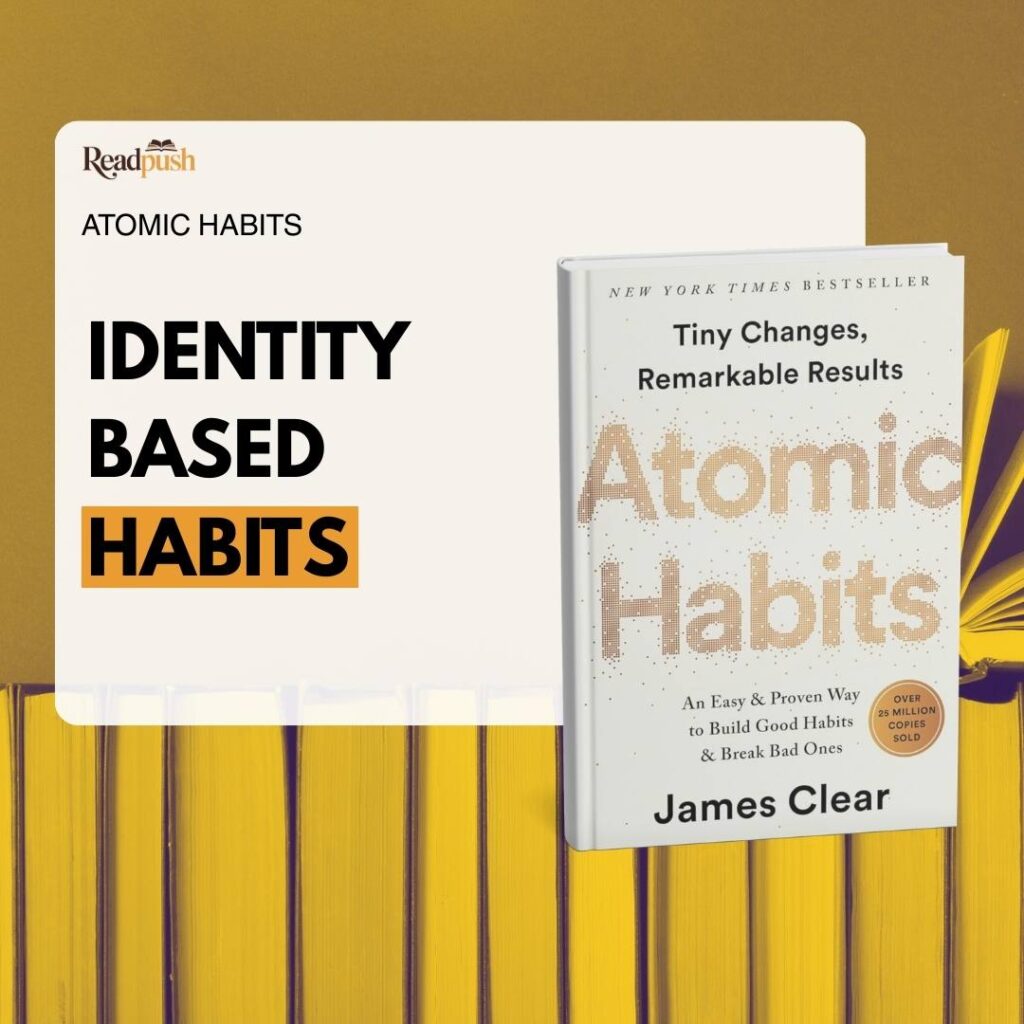
This is what James Clear calls identity-based habits, and it is the part of Atomic Habits that tends to stay with people longest. Not because it is the most tactical idea in the book, but because it is the most honest one.
The three layers of change
Clear describes behavior change as operating at three different depths. The outermost layer is outcomes: what you want to achieve. The middle layer is processes: what systems and routines you use. The innermost layer is identity: what you believe about yourself.
Most self-improvement advice works from the outside in. Set the goal, design the process, hope it sticks. Clear’s argument is that durable change tends to work from the inside out. When the habit reflects who you are, or who you are genuinely becoming, it does not need motivation to sustain it. It is just what that kind of person does.
The clearest example he gives is the difference between two people who are offered a cigarette and decline. One says “I am trying to quit.” The other says “I am not a smoker.” The behavior is identical. The internal story is completely different. And the internal story is what determines what happens the next time, and the time after that.
|
Identity-Based Habits Three layers of behavior change. Most advice starts at the top. Clear argues you should start at the bottom.
Most habit failure happens at the process layer because the identity layer was never addressed. |
||||||||||||||||||
Every action is a vote
This is the framing from the book I keep returning to, because it does something useful: it removes the all-or-nothing pressure from individual habits while still making them matter.
Clear says that every time you act in line with your desired identity, you cast a vote for the person you are becoming. Every time you act against it, you cast a vote the other way. You do not need to win every vote. You just need to win consistently enough that the evidence accumulates on one side.
What this means practically is that missing one day does not unravel the identity. It is one vote. What matters is the pattern. What the majority of your actions are telling you about who you are. This is a kinder frame than most habit advice offers, and also a more accurate one. Identity is not built in a single decision. It is built in the aggregate of many small ones.
The corollary is worth sitting with: the identity you currently hold was also built this way. Through accumulated evidence, from years of small actions that added up to a story you now treat as fixed. It is not fixed. It is just the story that got the most votes so far.
Starting from the identity question
If you want to apply this practically, the question to start with is not “what habit do I want to build?” It is “who is the kind of person who would already do this naturally, and what do they believe about themselves?”
Someone who exercises consistently does not usually think of themselves as someone who has to force themselves to exercise. They think of themselves as someone who moves. The habit is downstream of the belief. So the work is not just building the habit. It is accumulating enough evidence to shift the belief.
The way to accumulate that evidence is through small, consistent actions, not dramatic gestures. One paragraph a day builds the identity of a writer more reliably than one marathon writing session every few weeks. Five minutes of exercise daily does more for “I am someone who moves” than an intense month followed by six weeks of nothing.
This is counterintuitive because we tend to measure effort by its intensity, not its consistency. But identity is built by consistency. The brain updates its model of who you are based on what you actually do, repeatedly, not what you do occasionally and memorably. The Four Laws of Behavior Change exist precisely to make that consistency easier to achieve. They lower the cost of showing up, which is what makes the vote-accumulation process sustainable over time.
The feedback loop
What makes identity-based habits self-sustaining over time is the loop they create. You act in line with the identity, which produces evidence, which reinforces the belief, which makes the next action feel more natural, which produces more evidence. It is slow to start and then surprisingly hard to stop.
The reverse loop is equally real, and worth being honest about. Acting against your desired identity also produces evidence. Enough of it, and the story shifts back. This is not meant to be threatening. It is meant to explain why the smallest actions matter: not because they are large in themselves, but because of what they are voting for.
A missed day does not break the loop. A pattern of missed days, with no effort to re-engage, does. Clear’s “never miss twice” rule is partly about streaks, but it is mostly about this: do not let the evidence accumulate on the wrong side long enough to change the story.
Where this can go wrong
There are a couple of ways this framework can mislead if you take it too literally.
One is over-identifying with a single habit. “I am a runner” sounds strong, but if running is the entire basis of that identity, an injury can feel like an identity crisis rather than a temporary setback. Clear addresses this briefly: the more flexible the identity, the more resilient it is. “I am someone who prioritizes health and movement” survives a running injury. “I am a runner” does not always.
The other is using identity language before you have the evidence to support it. Telling yourself “I am a disciplined person” when the honest truth is that you have been inconsistent for months is not affirmation. It is friction, because it conflicts with what you actually know about your own behavior. The identity needs to be earned incrementally, through the votes. It does not work as a starting declaration. It works as a destination you move toward by acting.
The same issue appears from another angle in The Startup Community Way by Brad Feld, where the business trade-off the book is trying to clarify becomes easier to see without turning the book into a slogan.
The same issue appears from another angle in The Four Laws of Behavior Change, where the question of attention, habits, and what actually changes behaviour becomes easier to see without turning the book into a slogan.
The same issue appears from another angle in Atomic Habits Quotes, where the question of attention, habits, and what actually changes behaviour becomes easier to see without turning the book into a slogan.
What this changes about the process
If you take the identity-based frame seriously, it shifts the question you ask when you are deciding whether to do the thing or skip it. The question stops being “do I feel like doing this today?” and starts being “is this what the person I am becoming would do?”
That is not a magic solution. There are days when even the identity question does not move you. But it is a more stable question than motivation, because motivation fluctuates with mood and circumstance while identity, once it starts to form, is considerably stickier.
The place to start is small. Not with a declaration of who you are going to become, but with one action today that a person with that identity would take. Then another tomorrow. The identity follows the evidence. Give it something to work with.
If you want to see how this idea fits into the broader argument of the book, the complete Atomic Habits review covers where the system works and where it has real limits. And if you want the practical companion to this piece, the guide to building habits that stick covers habit stacking and the two-minute rule in detail, with applications for each.
|
Common pitfalls Where identity-based habits break down, and what to do instead
|
||||||||||||||||