Imagine two ceos. One commands attention in every room, full of charisma and big promises. The other speaks softly, gives credit to the team and quietly sets audacious goals. A decade later, one company fades after initial success while the other dominates its industry. What separates them is not intelligence, funding, or strategy it’s leadership character.
Research from good to great found that companies outperforming the market by over seven times were led by what jim collins called level 5 leaders. They were humble, unassuming, yet fiercely determined to make their companies great for the long term.
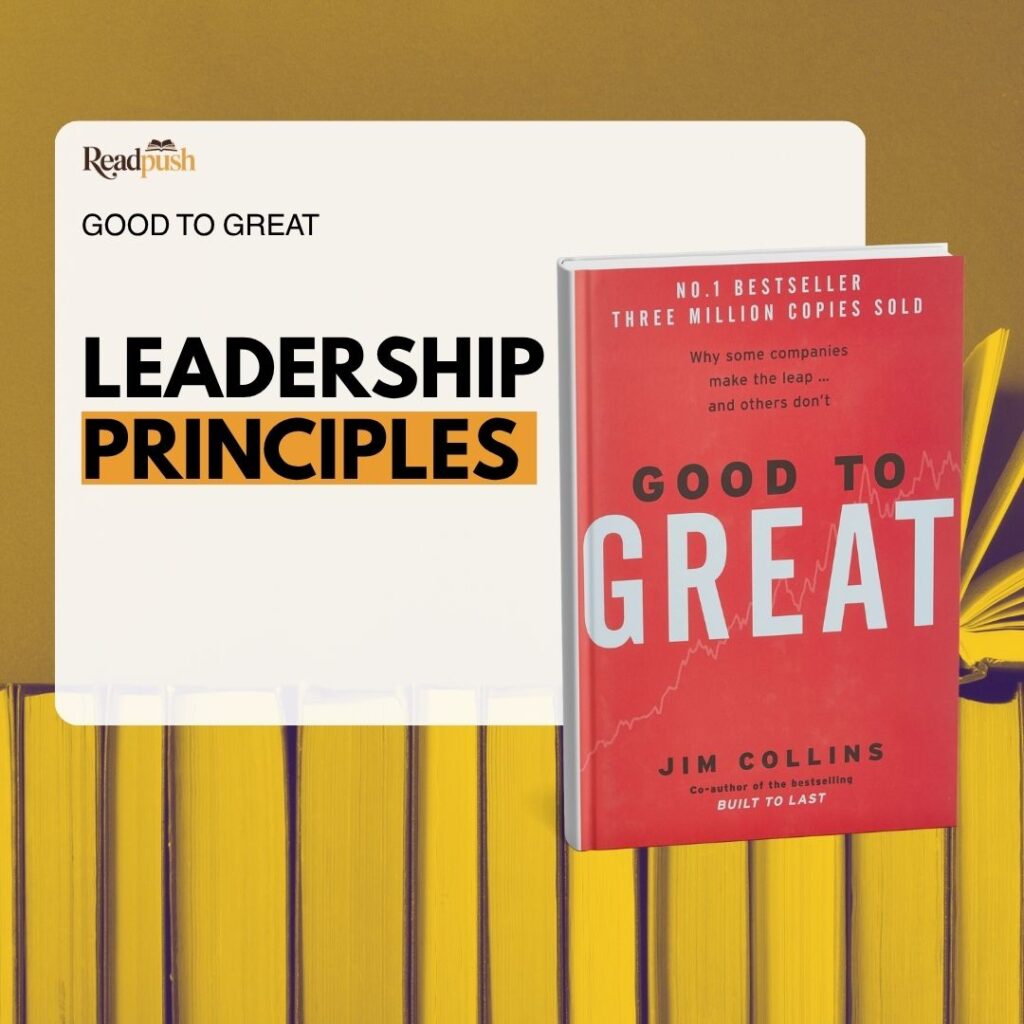
This insight comes from jim collins’ book good to great a research-driven exploration of how ordinary companies achieve lasting excellence. The book’s central idea is that greatness is not luck but the result of disciplined people and leadership choices. (read our good to great summary and leadership breakdown)
When ego outshines execution
Modern business culture glorifies charisma. We celebrate visionary founders, powerful speakers, and leaders who “disrupt everything.” But charisma alone often hides deeper flaws ego, poor delegation, and short-term thinking.
When leaders prioritize personal recognition over company purpose, teams lose trust. High turnover follows. Innovation slows down. The organization becomes centered on one personality rather than a shared mission. The result is fragility, not greatness.
Collins’ research revealed that companies led by egocentric executives performed well temporarily, then declined. Those led by humble yet driven leaders built enduring greatness. Without understanding this difference, leaders risk becoming their company’s biggest limitation.
If you’ve ever felt that success depends too heavily on your personal drive or presence, this principle will shift how you see leadership. It’s not about how loud you are, but how deeply you care about building something that lasts.
What is level 5 leadership
The two sides of level 5 leadership
A level 5 leader combines personal humility and professional will. These two qualities rarely coexist but together they create extraordinary results.
1. Personal humility
level 5 leaders are modest and self-effacing. They give credit to their team when things go well and take full responsibility when they don’t. They don’t seek attention or applause. Instead, they focus on the mission.
2. Professional will
behind their humility lies an iron will. These leaders will do whatever it takes to make the company succeed no matter how hard, slow, or uncomfortable it gets. Their determination is not loud but relentless.
Why it works
Collins found that charisma can inspire people temporarily, but humility and consistency create loyalty and accountability. Level 5 leaders attract self-motivated teams because their example invites ownership. When the focus shifts from “my success” to “our success,” everyone rises.
Level 5 leadership sits at the top of collins’ good to great leadership principles, building on earlier stages: competent individual, contributing team member, competent manager, and effective leader. The level 5 leader integrates all these and adds the moral dimension service to something greater than self.
Real-world examples
- Darwin smith at kimberly-clark: quietly sold the company’s traditional paper mills to focus on consumer paper products, outperforming procter & gamble over 20 years.
- Colman mockler at gillette: rejected multiple buyout offers to protect employees and long-term value, turning gillette into a global brand.
Their results speak louder than charisma ever could.
(learn how this concept supports the flywheel effect framework for steady, compounding growth.)
Why this matters: the true measure of leadership
Level 5 leadership challenges the modern idea that success depends on personality or hype. In reality, great leadership is defined by results that endure beyond the leader’s presence.
When you lead with humility, your decisions are not about ego but about what serves the mission. When you pair that humility with professional will, you earn the respect that charisma cannot buy. The company becomes more stable, more ethical, and more adaptable.
For entrepreneurs and business builders, this mindset shift changes everything. You move from being the driver to being the architect. You start designing systems and teams that thrive without constant oversight. That is the essence of sustainable business transformation.
How to apply this: becoming a level 5 leader
You don’t need to be born a level 5 leader. It’s a discipline that can be practiced daily.
1. Focus on the mission, not yourself
Ask in every decision: “does this serve the organization’s purpose or my personal image?” The distinction builds integrity over time.
2. Give credit, take blame
Publicly celebrate team success. Privately take responsibility when things fail. This habit builds loyalty and sets cultural tone.
3. Build successors, not followers
Mentor others to lead independently. True greatness is when your company thrives after you leave.
4. Confront the brutal facts
Level 5 leaders face reality head-on. They do not hide problems under optimism. Learn how to build a culture of truth through collins’ confront the brutal facts framework.
5. Practice disciplined will
Choose consistency over chaos. Keep your focus on long-term metrics, not immediate applause.
When you apply these steps, expect resistance at first. Teams used to top-down authority might feel uncertain. But over time, humility and consistency will earn trust and commitment.
(for a complete guide to implementing these principles, read our how to build a culture of discipline walkthrough).
Common mistakes to avoid
- Mistaking humility for weakness
being humble does not mean being indecisive. It means acting with quiet confidence. - Chasing recognition
the desire to prove yourself can subtly shift focus from company success to personal validation. - Avoiding tough conversations
level 5 leaders are kind but firm. They confront reality, even when uncomfortable. - Failing to develop other leaders
without successors, greatness fades when you leave. Empower others early and often.
Avoiding these traps keeps your leadership aligned with good to great principles.
Connection to other key ideas
Level 5 leadership is the foundation for all good to great leadership principles. It connects directly to the hedgehog concept, which defines where to focus, and the flywheel effect, which explains how steady effort creates lasting momentum.
This concept works in tandem with the hedgehog concept discover how clarity of purpose strengthens leadership decisions in our hedgehog concept breakdown.
Together, these ideas create a blueprint for turning good organizations into great ones.
building greatness that outlasts you
The most powerful leaders are not the loudest in the room they are the most consistent in action and integrity. Level 5 leadership transforms companies because it shifts focus from self to service, from charisma to consistency, from ambition to purpose.
When you embody this principle, your organization becomes resilient and self-sustaining. You stop chasing greatness and start building it.
For more insights from good to great, including five actionable lessons and leadership case studies, explore our complete good to great summary and analysis.
What this idea changes in practice
The useful way to read this piece is not as a shortcut around the book, but as a way to decide what the book is really asking you to notice. Good to Great is easy to reduce to a phrase. The phrase is helpful, but it is also where many readers stop too early.
The practical question is: what changes after you understand the idea? If the answer is only that you can repeat the concept in a meeting, the idea has not done much work yet. A good business or self-improvement book should change a decision, a habit, a conversation, or a way of measuring progress.
For this article, the change is usually smaller and more concrete than the headline suggests. You stop treating the concept as an inspirational lesson and start using it as a filter. It helps you decide what to ignore, what to inspect more closely, and where your current approach may be wasting effort.
That is where ReadPush readers get the most value. Not from another summary, and not from pretending the book is perfect. The value is in separating the durable idea from the noise around it.
Where readers often get it wrong
The common mistake is to treat the book’s central idea as universal. Most book ideas are not universal. They are conditional. They work better for some people, teams, markets, and seasons than others.
That does not make the idea weak. It makes it usable. Advice becomes more useful when you know its boundary. A habit system helps when your life has enough stability to support repetition. A strategy framework helps when the market conditions match the assumptions behind the framework. A finance lesson helps when it is applied to the right kind of risk, not every risk.
So the better reading is not, is this book right? The better reading is, where is this book right, and what would make it wrong for me? That question protects you from two bad habits: dismissing useful books because they are imperfect, and overusing famous books because they sound confident.
If you take only one thing from this article, take that discipline. Apply the idea where the conditions fit. Leave it alone where they do not.
How to apply the lesson without overcomplicating it
Start with one decision. Do not turn the book into a whole operating system on day one. That is how good ideas become heavy.
- Name the problem. What are you actually trying to improve: focus, growth, cash flow, consistency, leadership, decision quality, or something else?
- Pick the relevant principle. Choose one idea from the book that speaks directly to that problem.
- Define the test. What would look different after two weeks if the idea is working?
- Review the result. Keep what helped. Drop what added friction.
This keeps the lesson grounded. You are not trying to become the kind of person who has mastered the whole book. You are trying to make one part of your work or life less vague.
The same issue appears from another angle in The 80 20 rule marketing, where the marketing problem behind the framework becomes easier to see without turning the book into a slogan.
The same issue appears from another angle in Why direct response marketing outshines branding, where the marketing problem behind the framework becomes easier to see without turning the book into a slogan.
The same issue appears from another angle in powerful quotes from good to great, where the business trade-off the book is trying to clarify becomes easier to see without turning the book into a slogan.
A better final takeaway
The strongest books on ReadPush are rarely the ones that give the neatest answers. They are the ones that improve the quality of your next question. Good to Great is worth returning to for that reason.
Ask what the idea reveals. Ask what it hides. Ask what it would look like in a normal week, with normal constraints, limited time, and imperfect follow-through. If the idea still helps there, it is probably worth keeping.
That is the standard. Not whether the book sounds impressive. Whether it survives contact with real life.