Quick takeaways
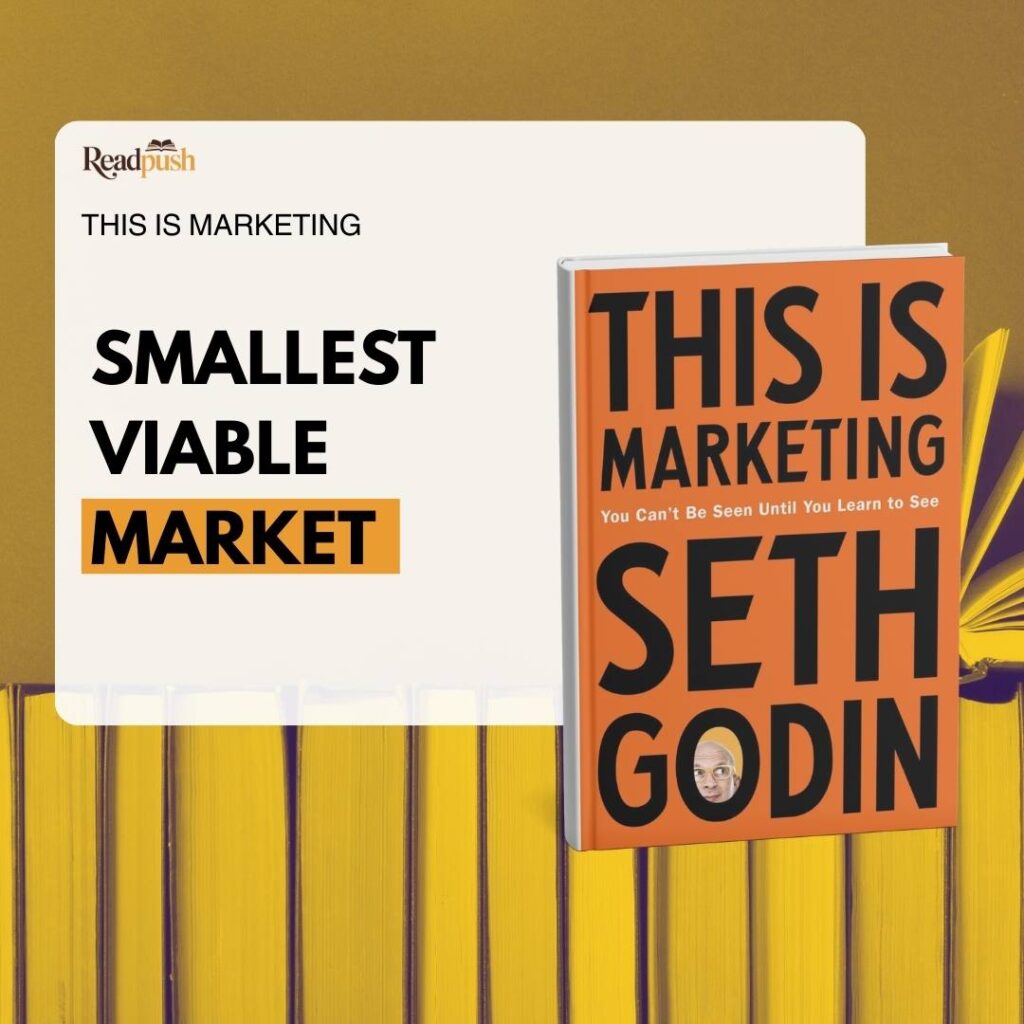
- The smallest viable market is the smallest group you can serve in a way that sustains the work. Not the largest. The smallest one that makes it worthwhile.
- “Women entrepreneurs aged 30-50” is not a smallest viable market. That is a spreadsheet column. The worldview piece is what separates the concept from demographic targeting.
- The idea does not mean “tiny audience forever.” It means starting with a group small enough that you can actually understand them, then letting resonance spread the idea.
- Godin is better on principle than on practice. The book explains the idea well. It is less useful on the messy middle part: how small is small enough, and what do you do when it is not working yet.
Here is the thing about Seth Godin: he has been saying the same stuff for twenty years, most marketing people have read at least one of his books, and the industry has largely ignored his core argument.
This Is Marketing is his clearest attempt yet to get the point across. Whether it works depends on whether you are willing to actually do the uncomfortable thing he is describing.
The uncomfortable thing is this: pick fewer people. Deliberately. On purpose. Not as a temporary phase you will grow out of, but as a strategy.
The idea
The smallest viable market is the smallest group of people you can serve in a way that sustains your work. Not the largest group. The smallest one that makes the whole thing worthwhile.
Godin’s logic is that when you market to everyone, you end up with a message so diluted that it resonates with almost no one. Broad appeals produce generic products, foggy positioning, and the kind of marketing copy that says a lot of words without saying anything. You have seen it. You have probably written it.
The alternative is to find a group of people who share a worldview, not just demographics, not just an age bracket or an income level, but an actual set of beliefs and values, and build something specifically for them. Something that would feel wrong to people outside the group and right to people inside it.
When you do that, two things happen. First, your product actually means something. Second, the people who connect with it tell others who think the same way. That is how small markets spread ideas: horizontally, through existing relationships, without you having to push.
The idea is not complicated. The execution is where people run into trouble. The full This Is Marketing summary covers how the smallest viable market fits into Godin’s broader argument about what marketing actually is.
Where this usually goes wrong
I have watched a lot of small businesses try to apply this and fumble it in the same few ways.
The first fumble: calling your existing audience your smallest viable market without actually narrowing it. “Women entrepreneurs aged 30 to 50” is not a smallest viable market. That is half the business world. A smallest viable market would be “women who left corporate jobs to start food businesses and feel embarrassed asking for help with numbers.” That is a worldview. The first thing is a spreadsheet column.
The second fumble: going small and then immediately trying to scale. Someone reads Godin, picks a tight niche, sees it working, and spends the next six months trying to make it appeal to a broader audience. They sand off everything that made it specific. They end up back where they started.
The third fumble, and this one is partly on Godin, is thinking “smallest viable market” means “tiny audience forever.” It does not. It means starting with a group small enough that you can actually understand and serve them, then letting them spread the idea. Most brands that look massive now were once deeply specific. They grew through resonance, not by starting big.
|
The three fumbles Where people apply this idea and get it wrong
|
||||||||||||||||||
The worldview piece
This is the part of This Is Marketing that gets glossed over in the summaries and should not.
Godin argues that demographics tell you where someone lives; psychographics tell you how they see the world. The smallest viable market is defined by a shared worldview: what the group believes about themselves, about their problems, about what a solution should feel like.
If you do not understand the worldview, you cannot write a message that lands. You end up with something technically correct that feels generic because it is not speaking to how this particular group thinks. The product can be good and still not connect because the framing is off.
The practical exercise here is less “who are these people” and more “what do these people believe that most people do not?” Answer that honestly and your message more or less writes itself. The twelve lessons from This Is Marketing develops the worldview argument alongside the other ideas the book is built on.
What Godin gets right
The diagnosis is accurate. Most marketing fails because it is built to impress, not to connect. It is built for scale before it is built for resonance. It treats humans as demographic buckets instead of people with specific beliefs who are making decisions about their identity when they buy something.
The argument that specificity is generosity, that by deciding who you are not for you deliver more value to who you are for, is correct and underrated. The pressure to appeal to everyone is real, especially in small businesses where every lost customer feels significant. Godin’s permission to narrow is useful.
The honest reservation
The book is better on principle than on practice. Godin explains the idea well. He is less useful on the messy middle part: how do you actually identify the worldview? How small is small enough? What do you do when the smallest viable market is not generating enough revenue to sustain the work?
He also leans heavily on examples that worked, which is a problem most business books share. You can find a smallest viable market and serve it brilliantly and still fail for unrelated reasons. The framework does not protect against bad timing, bad product, or bad luck.
None of that makes the idea wrong. It just means you should not treat This Is Marketing as a playbook. It is closer to a philosophy with some examples attached. If you want something more operational alongside it, the 1-Page Marketing Plan is the tactical companion that covers the execution layer Godin mostly skips.
|
Honest verdict What the smallest viable market idea gets right, and where it runs thin
|
||||||||||||
The same issue appears from another angle in Trust in Marketing Is Pattern Not Message, where the marketing problem behind the framework becomes easier to see without turning the book into a slogan.
The same issue appears from another angle in The Startup Community Way in Its Own, where the business trade-off the book is trying to clarify becomes easier to see without turning the book into a slogan.
The same issue appears from another angle in The Startup Community Way by Brad Feld, where the business trade-off the book is trying to clarify becomes easier to see without turning the book into a slogan.
The thing worth taking
If you are working on anything that involves selling to people, the smallest viable market idea is worth internalising. Not as a tactic. As a way of thinking about who your work is actually for.
The question “who is this not for?” is more clarifying than “who is this for?” Most people can answer the second question without much thought. The first one forces you to make a real decision.
Make the decision. Then build something that would feel wrong to everyone outside that group. If it does not feel a little too specific, you have not gone far enough.
Godin has been saying this for a while. At some point it stops being a book recommendation and starts being a test of whether you will actually do it.