Quick takeaways
- Each of the four case studies in Blue Ocean Strategy illustrates a different tool from the framework: Cirque du Soleil demonstrates value innovation, Southwest demonstrates the six paths, Nintendo demonstrates a functional-to-emotional shift, Yellow Tail demonstrates the noncustomer analysis.
- In every case, the company simplified rather than added. The blue ocean moves eliminated or reduced industry-standard elements that buyers did not actually value, and redirected that investment toward something the existing industry was not offering.
- None of these companies competed harder in their existing space. They redefined what the space was about, which made the existing competitors less relevant by design.
- The mistake most leaders make when studying these cases is to copy the specific moves rather than understand the underlying logic. The logic is transferable. The specific moves are not.
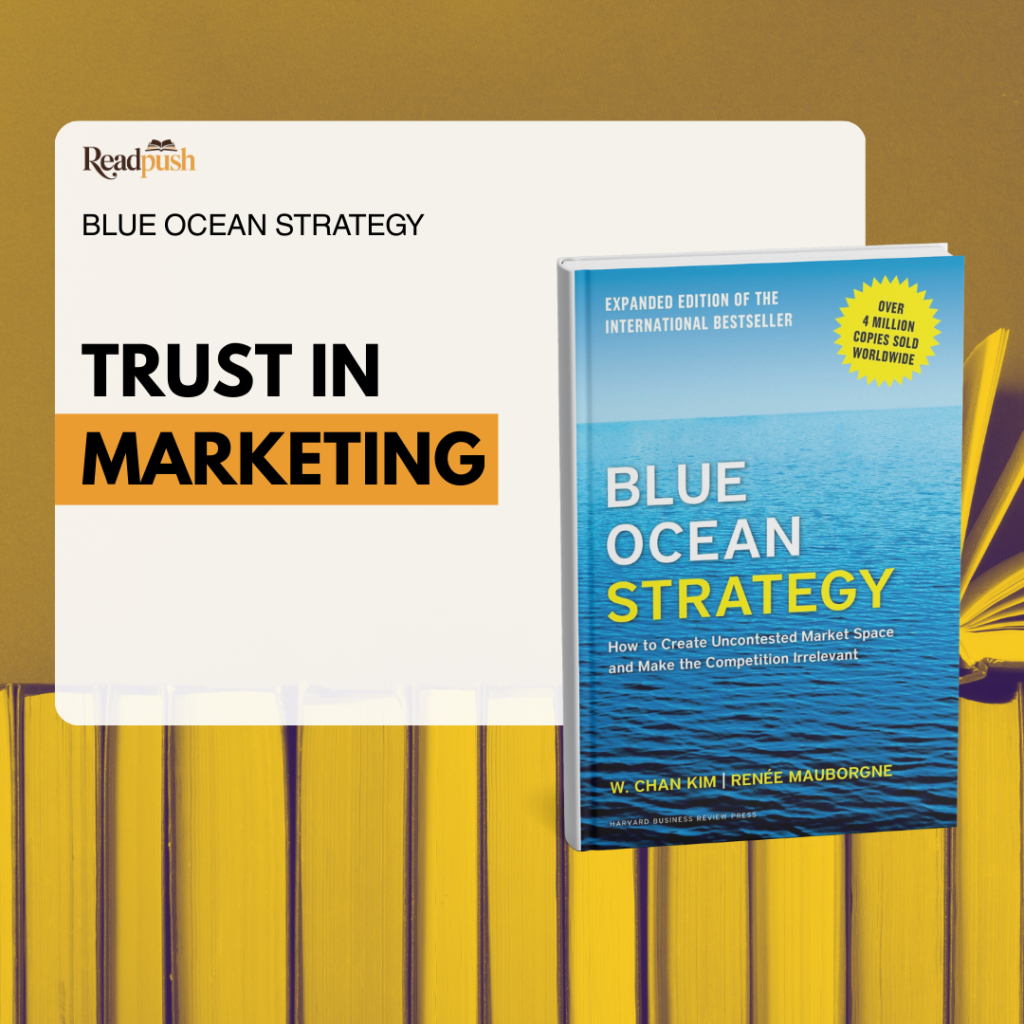
Blue Ocean Strategy by W. Chan Kim and Renée Mauborgne is built around a set of analytical tools, and the case studies in the book exist to show those tools in operation. Understanding what Cirque du Soleil or Southwest Airlines actually did is less important than understanding which framework each case is demonstrating and why the move worked. The complete guide to Blue Ocean Strategy covers the full framework and its theoretical basis. This piece focuses on the four cases the book returns to most often, with analysis of what each one illustrates.
What these cases have in common
Before going through each company, it is worth noting the pattern that runs across all of them. In each case the company was operating in an industry that looked stuck: declining audiences, commoditised competition, or a customer base that had stopped growing. In each case the company’s response was not to compete harder but to question what the industry had defined as value in the first place. And in each case the result was a new value curve that diverged visibly from the rest of the industry rather than a slightly better version of the same offering.
Kim and Mauborgne use the strategy canvas as a diagnostic tool throughout the book. The point of drawing the value curves of existing competitors is to make visible how similar they look. When a whole industry’s value curves cluster together, it is a sign that companies have been watching each other rather than studying buyers. All four of these cases represent companies that stopped watching competitors and started asking a different question.
Cirque du Soleil: value innovation in practice
By the early 1980s, the traditional circus was in structural decline. Rising costs, animal welfare concerns, and changing audience tastes had eroded margins and attendance across the industry. The obvious strategic response would have been to cut costs, find cheaper animal acts, or try to reverse-engineer what the most successful circuses were doing. Cirque du Soleil did none of that.
The company’s founders looked across to a different category of entertainment entirely, specifically to theatre and the performing arts, and asked what that audience valued that a circus could potentially offer. The result was a radical redesign of the value curve. Animal acts were eliminated. Star performers were eliminated. The tent remained, but the experience inside it changed completely: original musical scores, sophisticated lighting, choreographed movement, adult-oriented themes.
What made this a blue ocean move rather than a simple product redesign was the cost structure it enabled. Eliminating animals and marquee names cut some of the highest operating costs in the industry. Redirecting that budget toward artistic production created something buyers had not been offered before. The offering cost less to produce and sold at premium ticket prices, because it was reaching a different audience rather than competing for the same shrinking one.
This is what Kim and Mauborgne mean by value innovation: simultaneously reducing cost and increasing buyer value, not through efficiency gains but through redesigning what the offering includes. The four actions framework (eliminate, reduce, raise, create) maps directly onto what Cirque did. The framework is covered in detail in the value innovation piece; what this case adds is the concrete before-and-after picture of how an industry-standard value curve transforms into something genuinely distinct.
Southwest Airlines: the six paths in operation
Southwest’s insight was that for short-haul routes, its real competition was not other airlines. It was the car. People driving between cities were making the same journey that Southwest was flying, and the calculation they were making was about total trip time, convenience, and cost rather than about airline loyalty programs or premium seating.
By reframing its competitive reference point from the airline industry to car travel, Southwest redesigned its offering around a different set of buyer priorities. The elements that airlines competed on, seat classes, meals, hub connectivity, frequent flyer status, were removed or reduced. What replaced them was frequency, on-time reliability, simplified check-in, and a fare structure that made flying economically comparable to driving rather than obviously more expensive.
This is the logic of the six paths framework, specifically the path that asks companies to look across alternative industries. The underlying question is: what are buyers choosing instead of our category, and what makes that alternative attractive? The answer to that question often points toward what the existing industry is over-delivering (complexity, premium features, choice) and what it is under-delivering (simplicity, speed, affordability).
For context, Southwest’s moves were made in an industry where the regulatory environment of the 1970s had recently changed, which gave it room to operate in ways previously restricted. The book presents the strategic logic cleanly, but it is worth noting that deregulation was a precondition that other airlines could not simply replicate by deciding to think differently.
Nintendo Wii: shifting from functional to emotional appeal
By the mid-2000s, the gaming industry had oriented itself almost entirely around technical performance. Sony’s PlayStation and Microsoft’s Xbox competed on processing power, graphical resolution, and the complexity of the experiences they could deliver. The assumption, shared across the industry, was that the path to growth was more power and more sophistication.
Nintendo made a different observation. A large population of people, including families, older adults, and casual players, was not buying consoles at all. The complexity of modern games was not a selling point for these groups; it was a barrier. The industry had optimised for one audience segment while effectively excluding everyone else.
The Wii redesigned gaming around motion controls, social play, and immediate accessibility. The technical specifications were, by the standards of the PlayStation 3, modest. Nintendo had reduced investment in the dimension the industry was using to compete and redirected it toward an entirely different experience: something people who had never considered themselves gamers could pick up and use in ten minutes.
The result was the fastest-selling console in history at the time of its launch. The Wii grew the market rather than taking share from Sony and Microsoft, which is the structural characteristic of a genuine blue ocean move. The existing competitors were largely irrelevant to the audience Nintendo was reaching.
From a framework perspective, this case illustrates the six paths concept of looking across functional and emotional appeal. Gaming had become a functional proposition, built around technical capability. The Wii made it an emotional and social one, built around fun and accessibility. The shift in competitive axis created a new category rather than a new product.
Yellow Tail: reaching noncustomers
The wine industry is a useful case precisely because it seems so unlikely. Wine had accumulated decades of conventions: region, vintage, varietal, tasting notes, the assumption that choosing well required expertise. These conventions served experienced wine buyers and excluded everyone else. The excluded group was large: the millions of people who drank beer, spirits, or soft drinks when they wanted a casual drink and found wine too confusing or too expensive to navigate.
Yellow Tail, an Australian brand launched in the United States in 2001, stripped away virtually everything the industry competed on. There was no vintage communication. The tasting notes were removed. The label was simple and distinctive. There were initially just two wines: a Shiraz and a Chardonnay, both approachable in flavor profile, both priced between beer and premium wine.
The target was not the wine drinker. It was the beer drinker considering a change. By studying why people avoided wine rather than why wine buyers preferred one label over another, Yellow Tail found an uncontested space that the entire existing wine industry had overlooked, because the entire existing wine industry was watching each other.
Within two years of launch, Yellow Tail was the best-selling imported wine in the United States. The book uses this case to illustrate the noncustomer analysis: identifying people who could benefit from a category but currently choose not to use it, and asking seriously what the barriers are. The answers to that question often require the company to undo something the industry regards as a feature.
Common misconceptions about what these cases demonstrate
That the takeaway is to simplify everything. Simplification was the correct move in each of these cases because the industries in question were over-complex relative to what significant buyer segments actually needed. That does not mean simplification is always correct. The four actions framework asks what to eliminate, reduce, raise, and create, and all four questions matter equally.
That these moves were obvious in hindsight. They were not. The airline industry had been watching Southwest fail to build hub-and-spoke routes and dismissed it as a regional curiosity for years. Nintendo’s competitors publicly predicted that the Wii’s modest technical specifications would limit its appeal. The moves looked obvious only after the results were in.
That the same move could work in other industries today. The cases are old enough that the specific moves have been studied, discussed, and in some cases imitated. The lesson is the underlying logic, not the specific decisions. Ask what your industry over-delivers, who avoids your category and why, and what alternative categories buyers are choosing instead. Those questions produce different answers in different industries.
That blue ocean moves require a startup or a small company. Cirque du Soleil was a small touring group at the start. Southwest was a regional carrier. But the framework has been applied by large established companies as well. The case studies happen to feature insurgents because insurgents often have more reason to question existing assumptions than incumbents do.
The same issue appears from another angle in Value Innovation, where the business trade-off the book is trying to clarify becomes easier to see without turning the book into a slogan.
The same issue appears from another angle in Blue Ocean Strategy Lessons, where the business trade-off the book is trying to clarify becomes easier to see without turning the book into a slogan.
The same issue appears from another angle in How to Apply Blue Ocean Strategy, where the business trade-off the book is trying to clarify becomes easier to see without turning the book into a slogan.
What to take from the cases into your own context
The most useful exercise from these cases is not to ask “how do I do what Cirque did” but to ask “what does my industry’s strategy canvas look like, and where do all the curves cluster.” The clustering is the signal. Where everyone competes on the same factors at similar levels, the industry is in a red ocean, and the buyers who find the whole category unsatisfying are pointing toward potential blue water.
Three questions that run across all four cases: Who is not buying from this industry, and why not? What does the industry assume is essential that buyers might not actually care about? And what are buyers choosing instead when they avoid this category?
For further reading: Kim and Mauborgne’s Blue Ocean Shift (2017) extends the case study base considerably and adds a more detailed account of how these moves were implemented inside existing organisations, including the human dynamics of convincing teams to abandon familiar competitive reference points.