Quick takeaways
- The asset versus liability distinction is where the book earns its place. Everything else Kiyosaki teaches is either a consequence of that distinction or a tool for acting on it.
- The financial literacy argument is the most externally validated. The research consistently shows that most adults lack basic financial competency. The gap is real and expensive.
- The fear and peer pressure observations are the ones people skip. They should not. Identifying what is actually stopping you from acting is more useful than another list of what to do.
- Take one lesson and sit with it for a week before moving to the next. The ones that feel obvious usually have more in them than the first read suggests.
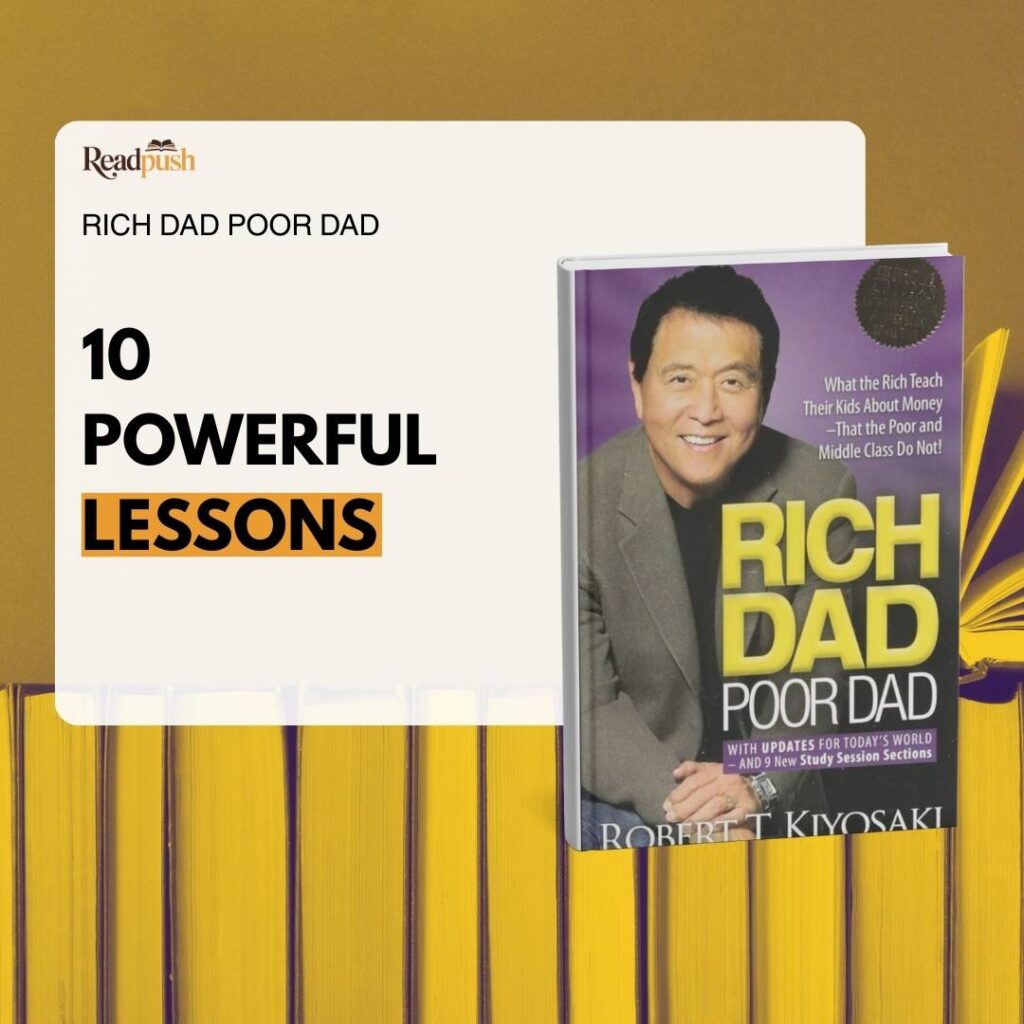
Rich Dad Poor Dad is one of those books people either swear by or roll their eyes at, often without having read it carefully. I have done both, at different points. The book has real problems, and I will not pretend otherwise. But it also has a handful of ideas that are genuinely worth applying, and those ideas tend to get lost in the debate about whether Kiyosaki is credible.
Here are the ten lessons I find most useful, with direct notes on how each one plays out in practice. The Rich Dad Poor Dad summary covers the full book and is worth reading alongside these if you want the context.
Lessons on how money actually works
1. Build the asset column, not the income statement
This is the thesis of the entire book, and it is worth being precise about what it means. Most people define financial success as earning more money. Kiyosaki argues the relevant measure is what you own that generates income when you are not working. These are different goals and they lead to different decisions.
High income without assets is fragile. The income stops when the work stops. Assets, in Kiyosaki’s framework, are things that put money in your pocket: rental properties, dividend stocks, business ownership, royalties. The point is to build enough of these that the income they generate covers your expenses. At that point, active work becomes optional. The guide to building your first passive income stream covers the practical first steps.
2. Know the difference between an asset and a liability
Kiyosaki’s definition is simple: an asset puts money in your pocket. A liability takes money out. By that definition, a car with monthly payments is a liability. A house you are paying a mortgage on is probably a liability. A rental property that earns more than it costs to hold is an asset.
Most people know this distinction vaguely. Very few apply it systematically to their own balance sheet. The exercise of classifying everything you own as asset or liability, and then asking what you are adding and why, tends to produce surprises.
3. Learn how money works before you earn more of it
Kiyosaki’s financial education argument is his most externally validated one. The research on financial literacy consistently shows large gaps in basic competency: most adults cannot correctly calculate compound interest, do not understand investment vehicle differences, and have no clear framework for evaluating financial decisions.
His argument is that earning more money without financial education just accelerates the same patterns. People with high incomes frequently have the same financial struggles as people with lower incomes, just at a larger scale. The education is the thing that changes the pattern. It is also the thing the school system largely did not provide.
4. Understand how the tax system actually works
This is one of the more practically useful chapters for people who have never thought seriously about how tax applies to different types of income. Wages are taxed heavily. Capital gains are taxed differently. Corporations have access to deductions that individuals do not. The tax code creates different incentives for employees, self-employed people, and business owners.
Kiyosaki is not arguing for tax evasion. He is arguing for financial education that includes understanding the rules of the game you are playing. Most people optimize only within the category they already occupy, without ever asking whether the category itself is limiting them.
|
Rich Dad Poor Dad 10 lessons: what each one is actually arguing
|
||||||||||||||||||||||||||||||||||||||||||||||||||||||||||||
Why this point matters
This idea matters because it changes how the reader judges the book. The useful question is not whether the author sounds convincing, but whether the principle helps explain a real decision, habit, or trade-off.
When the idea is used well, it gives the reader a clearer filter. It shows what to pay attention to, what to question, and what not to copy blindly from the book’s examples.
The same issue appears from another angle in Powerful lessons from The Total Money Makeover, where the money decision underneath the book becomes easier to see without turning the book into a slogan.
The same issue appears from another angle in How to Build Resilient Portfolio Using the, where the money decision underneath the book becomes easier to see without turning the book into a slogan.
The same issue appears from another angle in How McDonald Became Real Estate Company, where the business trade-off the book is trying to clarify becomes easier to see without turning the book into a slogan.
Lessons on action and the things that stop it
5. Pay yourself first
Counterintuitive in practice. Most people invest whatever is left after bills and expenses, which is usually not much and sometimes nothing. Kiyosaki argues for the opposite: put money toward investments first, then manage your expenses within what remains.
The point is not that you ignore your bills. It is that the pressure created by paying yourself first forces creative problem solving on expenses in a way that the reverse order does not. When you know the investment transfer is coming out first, you find ways to cover everything else. When the investment is whatever is left, it usually gets crowded out.
6. Work to learn, not to earn
Directed primarily at people early in their careers, but worth applying more broadly. Kiyosaki’s argument is that skills compound in a way that salaries often do not. A job that pays less but teaches you sales, operations, finance, or management develops capabilities that eventually translate into more options than a higher-paying job in a narrow specialty.
This does not mean work for free or stay somewhere exploitative. It means evaluate opportunities partly on what you will learn, not just what you will earn. The skills are portable; the salary is not.
7. Your mind is your most valuable asset
Before any external asset class, Kiyosaki argues for investing in financial education. The people who make the most expensive financial mistakes are usually not unintelligent. They are people who do not know what they do not know. They invest in things they do not understand, sign agreements they have not fully read, and make decisions based on what sounds right rather than what is actually right.
Financial education is not a one-time event. The rules and opportunities change. The goal is to build enough baseline competency that you can ask better questions and evaluate answers rather than trusting whatever sounds confident.
8. Fear and peer pressure are real financial constraints
Most financial advice treats decisions as purely rational. Kiyosaki is more honest about the emotional and social forces at work. The pressure to spend at the level of the people around you is real. The fear of doing something that others will judge as risky or irresponsible is real. The discomfort of being the person who talks about money differently than everyone else is real.
His argument is not that you should be reckless or ignore social relationships. It is that you should name these forces as constraints, because you cannot work around what you have not named. Most people never acknowledge that peer pressure and fear are shaping their financial decisions. That acknowledgment is worth something.
9. Surround yourself with people who know more than you
Not motivational advice. Practical logistics. A good accountant, attorney, and financial advisor are not luxuries for wealthy people. They are tools for preventing the expensive mistakes that people without them make regularly. The cost of not having them tends to exceed the cost of having them.
Kiyosaki also applies this more broadly: seek out people who have done what you are trying to do. Learn from their specific experience rather than from general principles. The specificity of what someone learned from an actual mistake is more valuable than most books, including this one.
10. Take responsibility for your financial situation
The bluntest lesson in the book. Kiyosaki argues directly that blame and resentment about your financial situation, however valid, do not change it. The only thing that changes it is what you do next. That requires accepting that you are the agent who can act, even if the circumstances were not your fault.
This does not mean external factors are not real. It means focusing on them as the explanation keeps you in the position of someone waiting for circumstances to improve. The focus he is asking for is: given what is true, what can I do? That question is more productive than most of the alternatives.
|
Where to start Which lesson to begin with, based on where you are
|
||||||||||||||||
The one I find people underestimate most is lesson 8. Everyone says they know about fear and peer pressure. Very few people have actually sat down and named the specific ways those forces are shaping their financial decisions. Do that before you move to tactics.