Quick takeaways
- “Mind Your Own Business” does not mean quit your job. It means stop treating your job as your financial plan. Your job is fuel. Your asset column is the destination.
- Pick one asset type and commit to it for at least 90 days. Impatience dressed up as strategy is the most common failure mode.
- Start with the most accessible option, not the most impressive one. A $19 template can exist by next Tuesday. A rental property cannot.
- Real passive income streams take three to five years to build, not three to five months. That is not a reason not to start. It is a reason to start sooner.
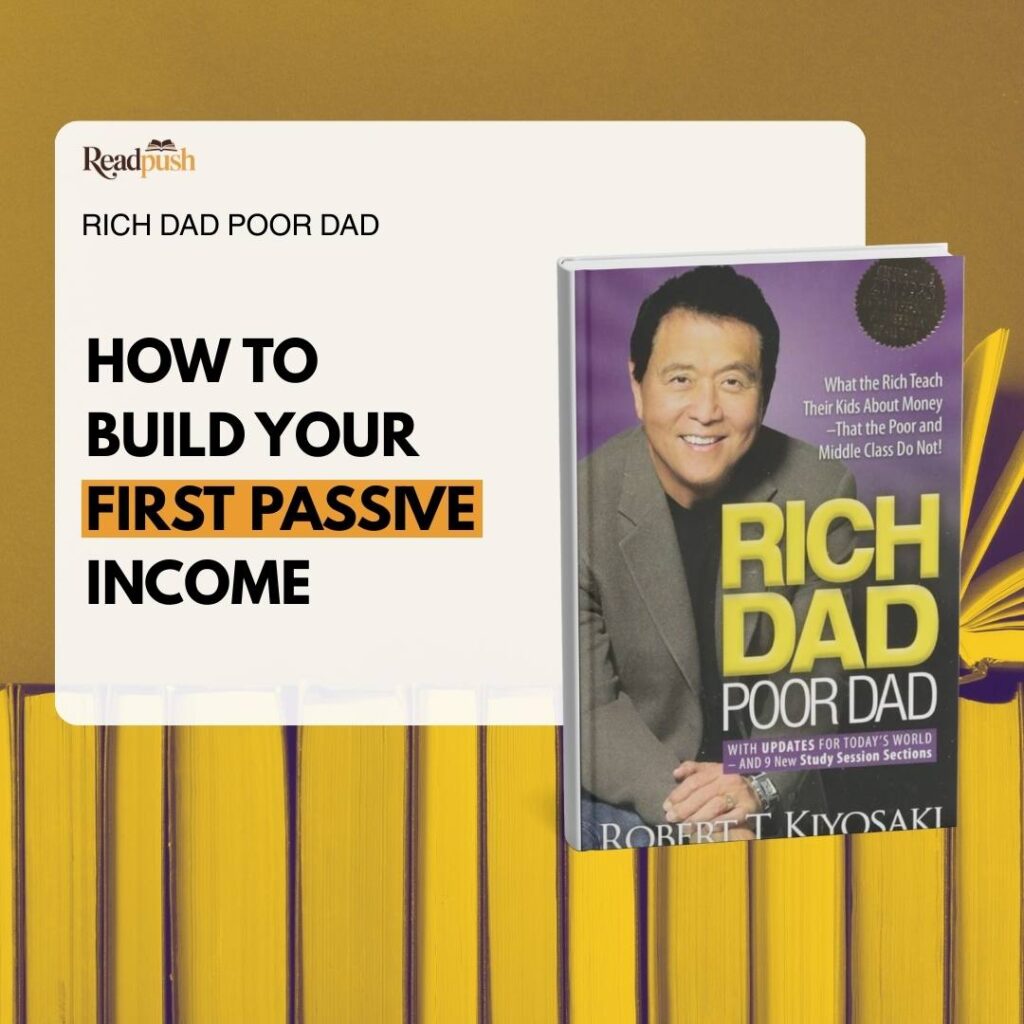
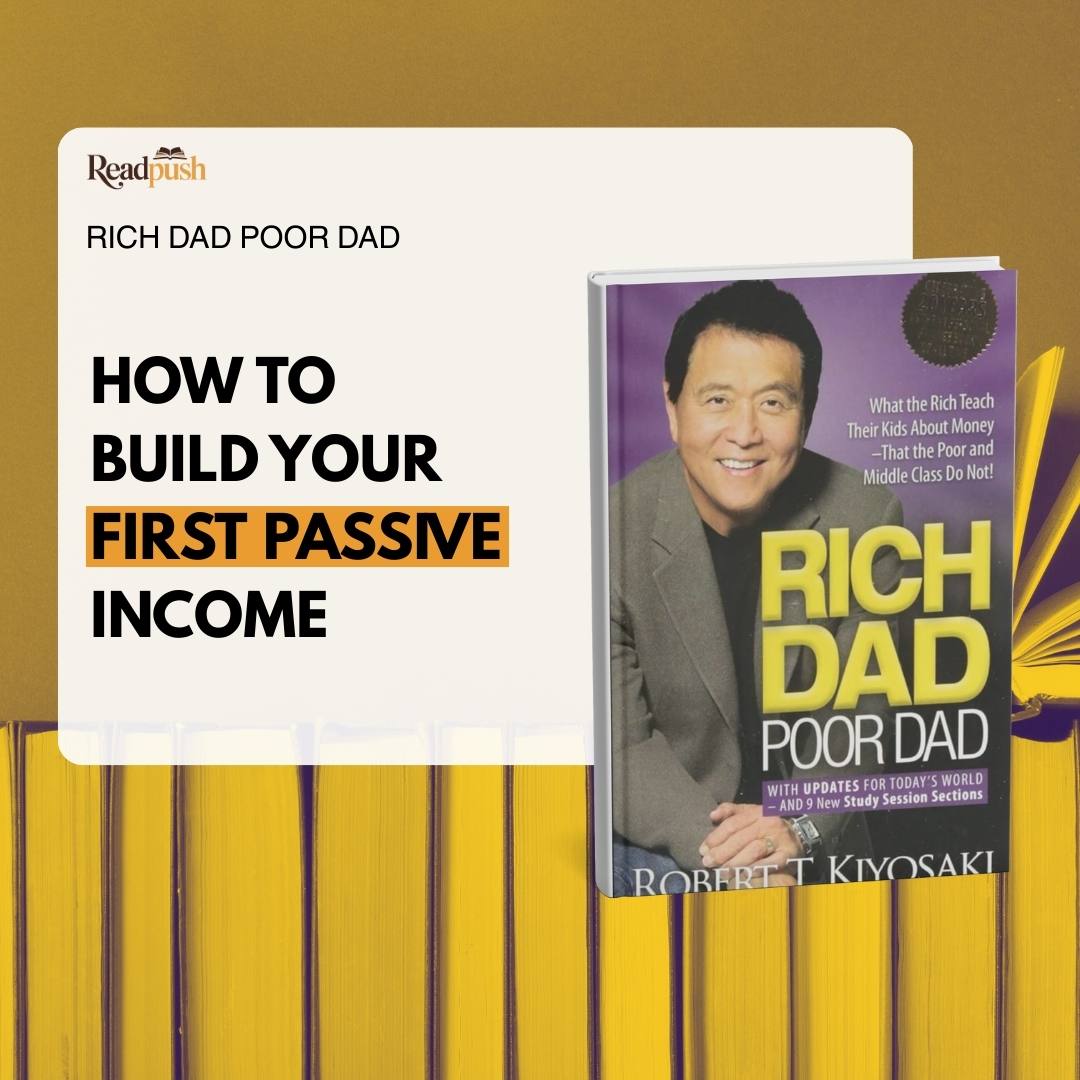
Here is the thing about the “Mind Your Own Business” chapter in Rich Dad Poor Dad: most people read it wrong.
They assume Kiyosaki is telling them to quit their job and go start a company. He is not. The actual idea is quieter and, honestly, more useful than that. Your job is fine. Keep it. What you need to stop doing is treating your job like your financial plan.
Your real job, by his definition, is building your asset column. The income your employer pays you is raw material. What you do with it after taxes and rent is what actually determines your financial future.
I spent about three years not understanding this distinction, even after I had read the book. I thought “build assets” meant “start a business.” It took me losing a chunk of savings on a bad speculative bet to understand that Kiyosaki meant something more boring and more durable: buy or build things that generate cashflow, and keep doing it until that cashflow covers your expenses. The honest assessment of Rich Dad Poor Dad covers the full framework, including where the book oversells what is actually involved.
That is the whole idea. Here is how to start it.
What “asset column” actually means in practice
Kiyosaki’s definition is simple: an asset puts money in your pocket. A liability takes money out. By that logic, your car is a liability. Your mortgage is probably a liability. A rental property earning more than it costs to hold is an asset. A dividend-paying stock is an asset. A digital product that sells while you sleep is an asset.
The framework is not telling you to get rich quick. It is telling you to redirect some portion of your income toward things that earn on their own, and to do it consistently, before lifestyle inflation swallows the difference.
That is the prerequisite worth being honest about: you need some margin in your monthly cash flow to make this work. If every dollar is already spoken for, the first step is cutting something before you can build anything. No asset strategy bypasses that math. If that constraint applies to you right now, the Total Money Makeover’s Baby Steps are designed specifically for that starting point, debt elimination before asset building.
Choosing your first asset type
The mistake most people make here is trying to chase the most impressive option rather than the most accessible one. Rental real estate sounds better than a $19 Etsy template, but the template can exist by next Tuesday.
Pick based on what you actually have: skills, time, savings.
If you have a skill that is teachable, a digital product, an online course, a template pack, a guide, is probably your lowest-friction entry. You build it once, list it somewhere, and iterate. Early income will be small. That is fine. You are learning the mechanics of building something that earns without you.
If you have savings and patience, dividend stocks are about as passive as passive income gets. The returns are modest and slow, but they compound, and you do not have to manage anything. The downside is you need capital to make the income meaningful.
If you have local knowledge and a tolerance for operational complexity, property management or co-hosting on rental platforms can generate real cashflow. But “passive” is a stretch, at least until you have systematised it.
Pick one. Not two. One, for at least 90 days.
|
Asset type selector Pick based on what you actually have, not what sounds most impressive
|
||||||||||||||||||||||||
The actual work in weeks one through four
Week one: Learn the mechanics of whichever asset type you chose. Not the motivational content about it: the actual how-it-works mechanics. How does pricing work? Where do buyers find products like this? What does a decent one look like versus a bad one? One week of focused research is enough to know whether you are in the right lane.
Week two: Build the smallest possible version of your asset. One template. One dividend stock position. One property listing pitch. Do not optimise. Do not polish. Get it into a form where it could theoretically earn money.
Week three: Launch it. Put it live on whatever platform makes sense. If it is a digital product, list it. If it is stocks, buy the shares. If it is a rental co-hosting pitch, send the emails. Your job this week is to make the thing real.
Week four: Measure what happened. What did people engage with? What did they ignore? What questions came up that you had not anticipated? The numbers at this point will probably be small or zero. That is expected. You are collecting information.
What kills this before it starts
The most common failure mode is not laziness. It is impatience dressed up as strategy. People build one thing, see modest results after a month, decide it is not working, and pivot to something completely different. They repeat this cycle indefinitely and wonder why nothing ever compounds.
Passive income takes longer to build than active income because you are building a system rather than trading time directly for money. The first few months rarely feel like progress. The people who get through that phase are the ones who committed to a specific asset type long enough to actually learn it.
The second failure mode is spending early earnings. If your first digital product makes $40 in month two, putting that $40 back into the asset, better product images, a small promotion budget, an upgraded tool, creates compounding. Pulling it out to cover a dinner does not.
The third is starting with too much complexity. Real estate sounds better than templates because it is more impressive at a dinner party. It is also harder, slower to start, and more capital-intensive. Build the habit of asset-building on something you can actually launch this week, then scale the complexity as your confidence and resources grow.
|
Failure patterns What kills asset-building before it starts, and the fix for each
|
||||||||||||
The same issue appears from another angle in How McDonald Became Real Estate Company, where the business trade-off the book is trying to clarify becomes easier to see without turning the book into a slogan.
The same issue appears from another angle in How Madison Wisconsin Built Its Startup Community, where the business trade-off the book is trying to clarify becomes easier to see without turning the book into a slogan.
The same issue appears from another angle in How Amazon Survived When Its Competitors Did, where the money decision underneath the book becomes easier to see without turning the book into a slogan.
The honest assessment
The “Mind Your Own Business” idea is one of the genuinely useful things in Rich Dad Poor Dad. The reframe, your job is fuel, your asset column is the destination, is worth internalising.
What the book undersells is the time it takes. Kiyosaki makes it sound like this is a switch you flip. It is not. It is a slow accumulation of small positions that eventually become meaningful. The people I know who have real passive income streams built them over three to five years, not three to five months.
That is not a reason to not start. It is a reason to start sooner and expect less from the early innings.
If you take nothing else from this: pick one asset type today. Not this week. Today. Write down what it is, why you picked it, and what the first concrete step looks like. Then do that step before the week is out.
That is the whole framework in practice. And if you want to understand the behavioral layer underneath why most asset-building attempts fail, the Psychology of Money is the book to read alongside this one. Housel’s survivability argument applies just as much to personal finance as it does to companies: the plan that compounds is the one that does not get abandoned in month two.