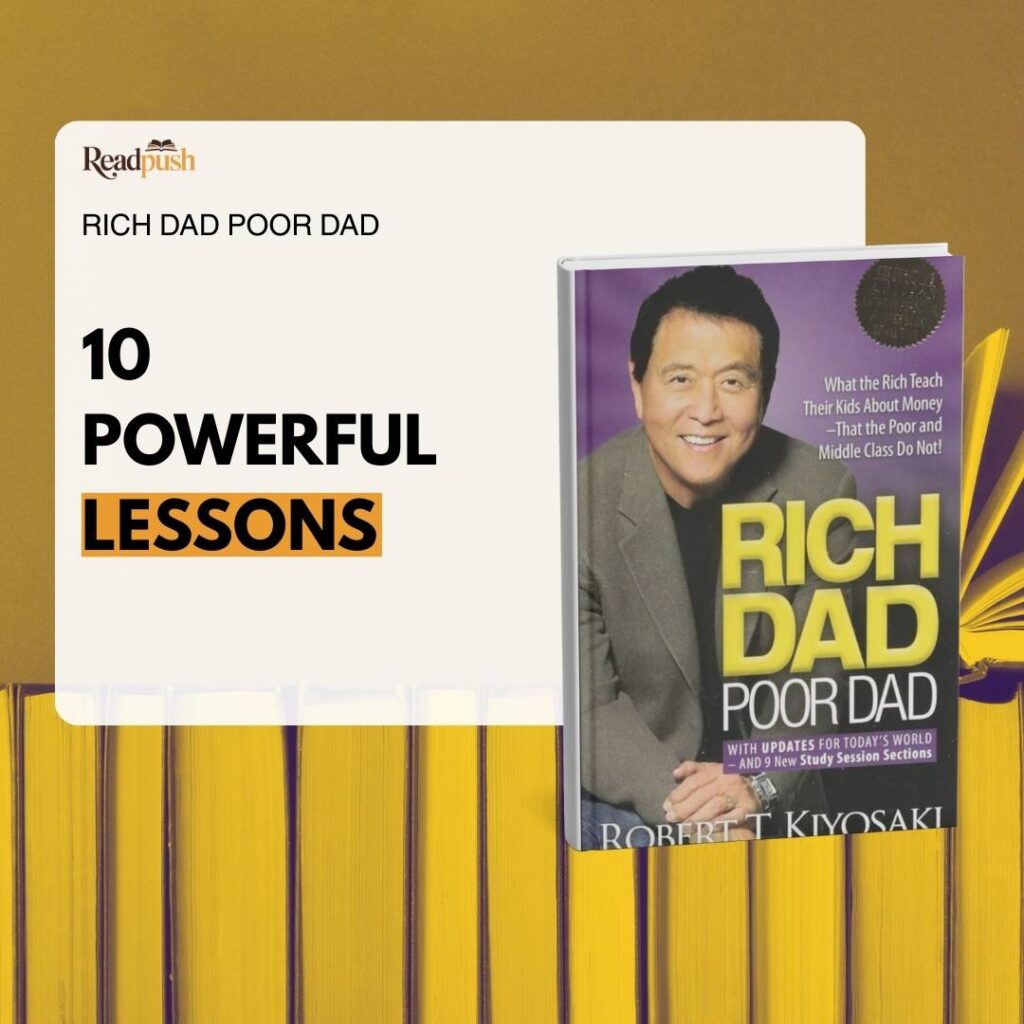

The money world is changing fast. People who learn how money works today will thrive, while those who rely on outdated ideas risk falling behind. This is why revisiting Rich Dad Poor Dad lessons matters now more than ever. The book remains a timeless guide for readers who want real financial clarity rather than vague advice. In Rich Dad Poor Dad, Robert Kiyosaki argues that the rich build assets and the poor chase income. Our complete review breaks down the full framework and expands on the story behind this core message.
What makes these lessons powerful is how simple they are to understand yet difficult to master. They force a mindset shift that challenges everything we were taught about work, money, and opportunity. Readers gain clarity on assets, cash flow, risk, taxes, and the psychology of wealth. These ideas help entrepreneurs sharpen strategy and help professionals escape financial stagnation.
You can read this list straight through or bookmark lessons you want to act on. Each one stands on its own, but together they form a blueprint for long term freedom. Use this guide as a thinking tool whenever you need direction or clarity. It is designed to help you build momentum without feeling overwhelmed.
Lessons on mindset
Lesson 1: focus on building wealth not earning income
The lesson
Most people chase higher salaries. Rich Dad Poor Dad lessons highlight that long term wealth comes from assets that pay you even when you do not work. Building income that grows without your labor changes everything.
Why it matters
Income gives comfort. Assets give freedom. This shift helps you stop trading time for money and start planning for independence.
How to apply this
- Set a goal to build one asset this year
- Redirect a small percentage of income toward investments
- Study cash flow opportunities such as rentals or dividends
- Prioritize learning over salary growth
Lesson 2: the rich see opportunities while others see risks
The lesson
Most people avoid risk. Kiyosaki teaches that opportunities often hide behind uncertainty. Those who learn how to evaluate and act on them expand their financial advantage.
Why it matters
Entrepreneurs who identify opportunities early can build leverage before the crowd discovers the same idea.
How to apply this
- Practice evaluating deals instead of dismissing them
- Surround yourself with problem solvers
- Follow markets and trends weekly
- Study one successful investor case study for pattern recognition
Lessons on financial literacy
Lesson 3: understand the difference between assets and liabilities
The lesson
Rich Dad Poor Dad insights emphasize that assets put money in your pocket and liabilities take it out. Many people buy liabilities thinking they are assets. This misunderstanding keeps them trapped financially.
Why it matters
Once you categorize your financial life correctly, you can redirect energy toward what creates freedom.
How to apply this
- Review your expenses and label each item as asset or liability
- Grow the list of cash producing items
- Pause lifestyle upgrades until your assets cover your core bills
- Track monthly cash flow in a simple spreadsheet
Lesson 4: financial education governs financial results
The lesson
The school system teaches people to work for money. Financial education teaches people how money works. Knowledge of taxes, debt, investments and markets becomes a personal advantage.
Why it matters
Inflation, economic shifts and new industries reward those who adapt. Skills give you control in an unpredictable world.
How to apply this
- Read a money book every month
- Learn basic accounting
- Follow economic news with intention
- Study one financial concept each week such as cash flow or valuation
Lesson 5: use money as a tool not a reward
The lesson
Most people spend because it feels good. Rich Dad teaches that money is a tool for opportunities, investments and future growth. Emotional spending weakens long term security.
Why it matters
Learning to delay gratification builds discipline. Discipline builds wealth.
How to apply this
- Set rules for purchases
- Avoid emotional buying
- Allocate money based on goals not impulses
- Build a simple reward system that does not damage your plan
Lessons on building independence
Lesson 6: work to learn not to earn
The lesson
A job can pay the bills but skills build wealth. Sales, communication, leadership and investing create long term leverage. Rich Dad Poor Dad key takeaways show that skills compound faster than salary.
Why it matters
Professionals with broad skills outperform those who rely only on their job title. Entrepreneurs thrive when they learn multiple disciplines.
How to apply this
- Choose roles that teach valuable skills
- Take sales training
- Volunteer for projects that stretch you
- Study negotiation and persuasion
Lesson 7: failure teaches more than success
The lesson
Fear keeps most people from trying. Rich Dad explains that mistakes teach the patterns of money. Learning by doing builds confidence and practical knowledge.
Why it matters
You cannot gain financial independence without taking small risks. Each experiment strengthens your intuition.
How to apply this
- Start small low risk investments
- Review mistakes regularly without emotion
- Replace fear questions with solution questions
- Take action even when you feel uncertain
Lessons on strategy
Lesson 8: taxes reward the investor and the entrepreneur
The lesson
Employees pay the highest taxes. Investors and business owners legally pay less because they operate through structures that allow reinvestment and deductions.
Why it matters
Understanding taxes gives you more capital to invest. It can accelerate your path faster than earning a higher salary.
How to apply this
- Learn how business entities work
- Track expenses that support your projects
- Reinvest earnings into new assets
- Consult a tax professional early
Lesson 9: build multiple income streams
The lesson
Relying on one paycheck creates vulnerability. Rich Dad Poor Dad insights show the importance of diversified income that protects you in any economic cycle.
Why it matters
Multiple income streams create safety and confidence. They also allow you to take bigger opportunities without fear.
How to apply this
- Start a side project
- Explore digital products or services
- Invest in dividend stocks
- Build a simple rental portfolio over time
Lesson 10: Cash flow is the foundation of financial freedom
The lesson
Asset value is helpful but cash flow sets you free. Consistent monthly income from assets reduces stress and increases your options.
Why it matters
Cash flow creates the security that allows you to make bold decisions in business and career.
How to apply this
- Choose investments with stable recurring income
- Build a portfolio that pays monthly or quarterly
- Focus on long term performance over hype
- Study successful case studies to improve your strategy with our detailed breakdown of Kiyosaki’s early investing journey
Key takeaways
- Wealth comes from assets more than salary
- Opportunity recognition is a learnable skill
- Financial literacy influences every money decision
- Disciplined spending multiplies long term gains
- Skills create leverage that salaries cannot match
- Failure accelerates experience
- Taxes favor investors who understand the rules
- Multiple income streams reduce risk
- Cash flow gives long term stability
- Mindset shapes financial destiny
Use these one sentence reminders to reinforce learning. They are simple but powerful when applied consistently. Save them and revisit them after major financial decisions.
Putting it all together
Rich Dad Poor Dad lessons connect mindset, financial literacy and long term strategy into a practical system. Once you learn to categorize assets and liabilities, financial questions become clearer. When you adopt the mindset of an investor, you start seeing opportunities everywhere. Skills and education help you take action with confidence. Each lesson strengthens the next and together they create a foundation for financial independence. The stories in the book show how small actions compound into life changing results. They also reveal how ordinary people can shift their trajectory at any age.
Your next step is to take one idea from this list and implement it today. Momentum builds when you take consistent action. If you want a deeper understanding of the philosophy behind these principles, our full summary explores the complete structure of Rich Dad Poor Dad and the ideas that shaped Kiyosaki’s approach to wealth.