
Quick intro
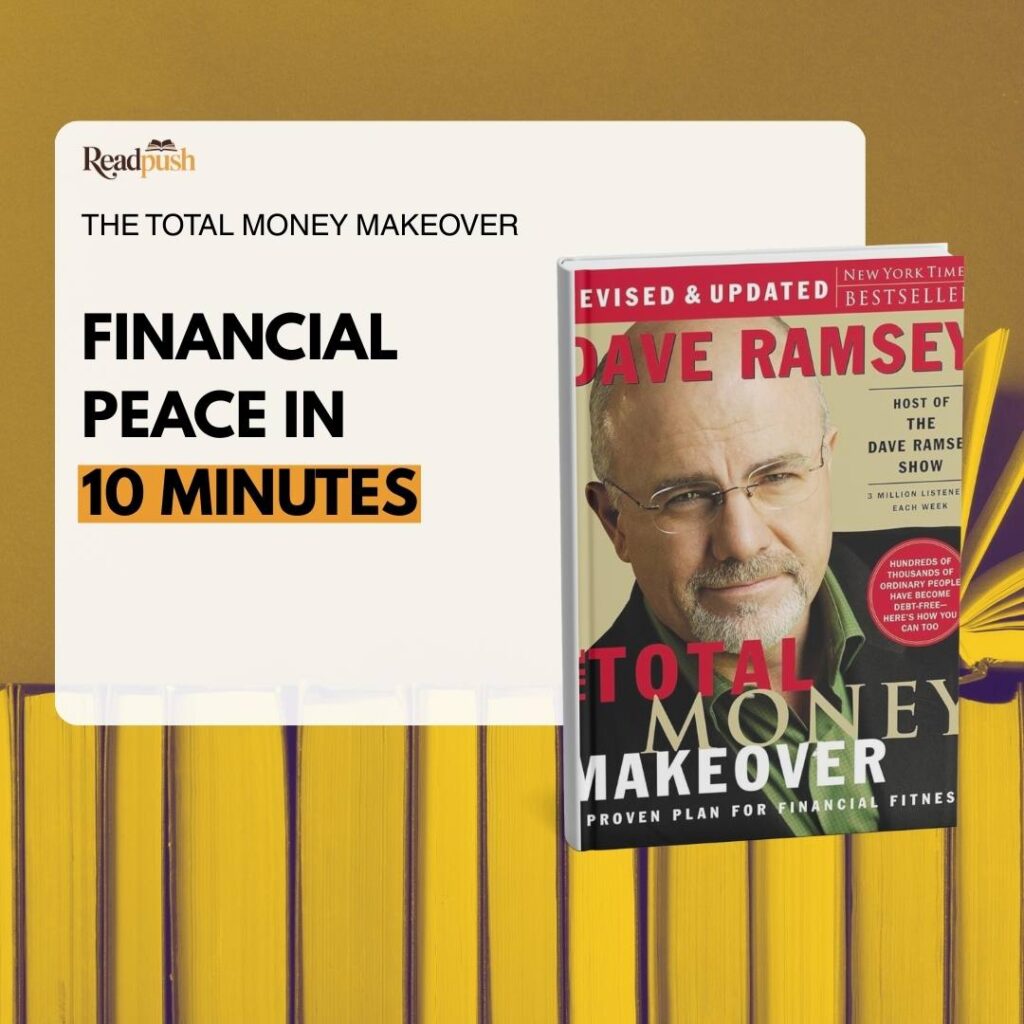
Few personal finance books have changed real lives at the scale of The Total Money Makeover. This book helped millions escape debt and regain control of their money using a simple system built on behavior, not theory. The core idea is clear. You do not need complex strategies to win with money. You need discipline, clarity and a proven process.
This summary of The Total Money Makeover is for readers who want fast insight without reading the full book yet. It is ideal for busy professionals, parents and entrepreneurs who want to understand the message quickly before going deeper. For a complete breakdown, see our full review of The Total Money Makeover and explore how the system works in detail.
About the book
The Total Money Makeover was written by Dave Ramsey, a personal finance expert and radio host known for helping everyday families get out of debt. First published in the early two thousands, the book remains relevant today because consumer debt and financial stress are higher than ever. The target audience is anyone who wants financial stability, especially people overwhelmed by debt or inconsistent money habits.
Main concepts
Concept 1: Debt is the enemy of wealth
The book argues that debt keeps people trapped financially and emotionally. Credit cards, car loans and personal loans delay progress and create constant stress. Ramsey believes that borrowing normalizes financial struggle and blocks long term growth.
A common example in the book is families earning good incomes but still living paycheck to paycheck because debt payments consume their cash flow. Once debt is removed, money finally starts working for them.
The takeaway is simple. You cannot build real wealth while dragging debt behind you. This idea is explored further in our analysis of why debt keeps you stuck.
Concept 2: Behavior matters more than math
Many financial plans fail not because they are wrong but because people cannot follow them. The Total Money Makeover focuses on psychology instead of optimization. It prioritizes momentum, motivation and emotional wins.
The debt snowball method proves this point. Instead of paying high interest debt first, readers pay off the smallest balance first to build confidence and consistency. That emotional reward keeps people moving.
The takeaway is that a plan you follow beats a perfect plan you quit.
Concept 3: Financial stability comes before investing
Ramsey emphasizes stability as the foundation of wealth. Before investing or thinking about returns, you must protect yourself from emergencies. This includes building a starter fund and then a fully funded emergency fund.
A family without savings will always be one crisis away from debt. A family with savings can absorb shocks without panic.
The takeaway is that saving is not optional. It is protection. We explore this idea in depth in our guide on how discipline builds financial freedom.
Concept 4: Wealth is built step by step
The book introduces the Baby Steps. These are seven clear stages that guide readers from financial chaos to wealth and generosity. Each step has one focus only, which removes confusion and decision fatigue.
For example, you do not invest until debt is gone. You do not pay off your home until savings and investing are in place. The order matters.
The takeaway is clarity. When you know exactly what to do next, progress accelerates.
Concept 5: Financial peace is the real goal
The Total Money Makeover is not only about numbers. It is about peace of mind. Ramsey argues that money stress damages relationships, health and focus. When money is controlled, life improves.
Stories in the book show families sleeping better, arguing less and feeling more confident once they follow the system.
The takeaway is that wealth is not only about money. It is about freedom and peace.
Key frameworks
The core framework of the book is the Baby Steps system. It moves you from a one thousand starter fund to debt freedom, emergency savings, investing, home payoff and generosity. Each step builds on the previous one and removes overwhelm. The system helps you focus on one financial goal at a time and build lasting habits.
For step by step implementation, follow our guide on how to build a fully funded emergency fund using Baby Step 3 from The Total Money Makeover and apply the system in real life.
Key takeaways
- Stop using debt to fund your lifestyle
- Build savings before investing
- Follow a clear step by step plan
- Focus on behavior not theory
- Use momentum to stay consistent
- Give every dollar a job with budgeting
- Protect your finances from emergencies
- Aim for peace not just wealth
For a deeper breakdown of these ideas, explore the key lessons from The Total Money Makeover and see how each lesson connects to the Baby Steps.
Bottom line
The Total Money Makeover summary shows why this book remains one of the most practical personal finance guides available. It is best for readers who want structure, discipline and clarity. The most important insight is simple. When you change your behavior with money, everything else follows.
To dive deeper, explore our complete breakdown of 15 lessons from The Total Money Makeover and our analysis of why debt keeps you stuck and how discipline builds financial freedom.