Quick takeaways
- These two books are not in competition. They are operating at different levels of the same problem: Ries at the level of the firm, Feld and Hathaway at the level of the community that surrounds firms.
- The shared epistemology is worth noting: both books argue that knowledge under uncertainty is produced through action and feedback, not through planning and prediction.
- The Lean Startup is more operational. The Startup Community Way asks better questions. Both are more honest than most of what surrounds them in their respective genres.
- Read Ries first if you are a founder. Read Feld second if you are building the environment founders operate in. The two complement each other without overlapping.
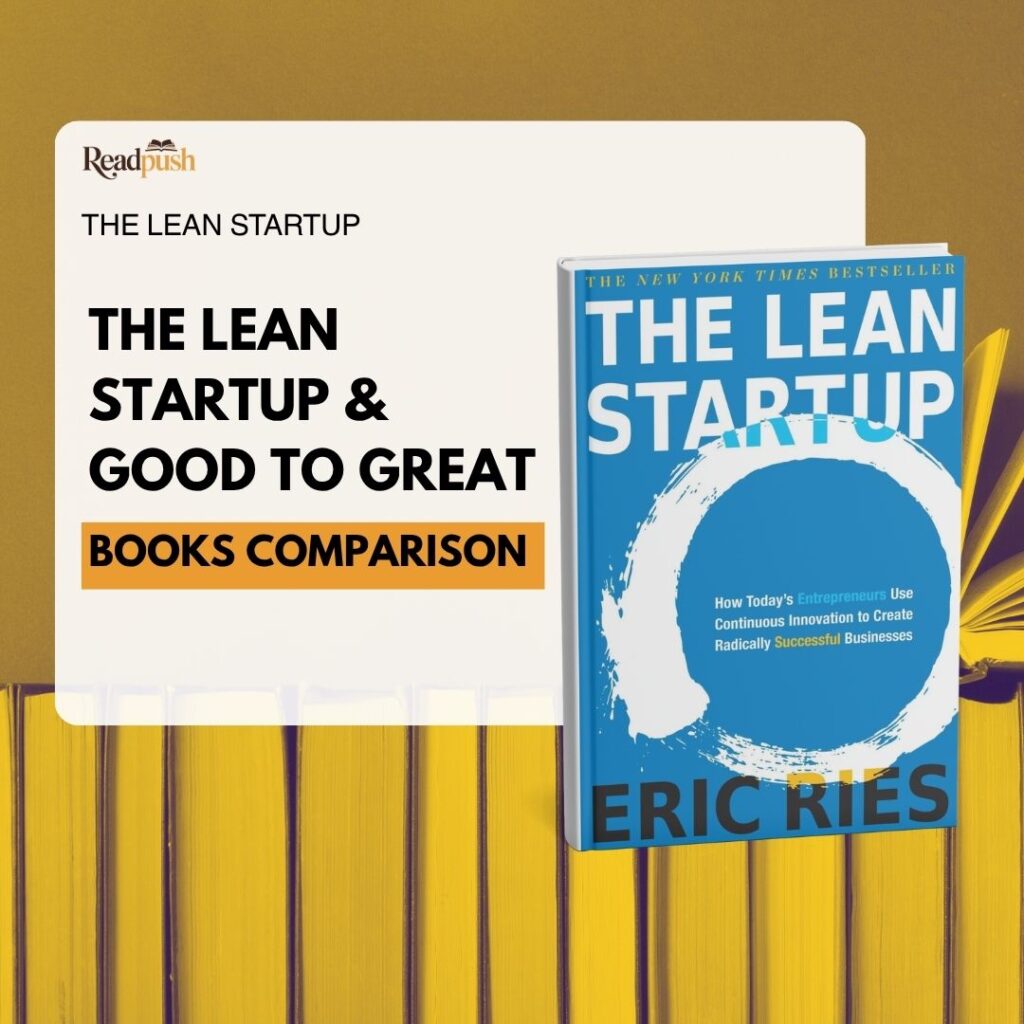
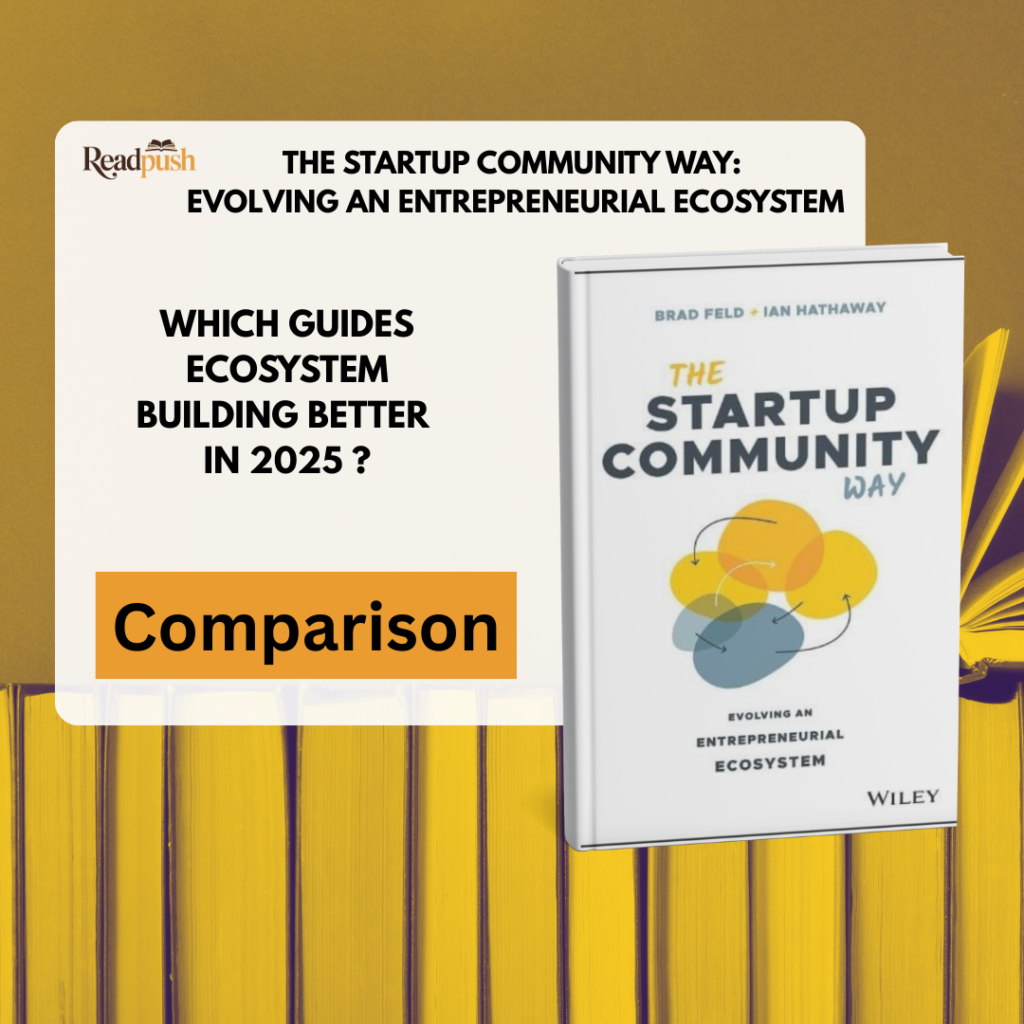
There is a version of this comparison that writes itself. The Lean Startup by Eric Ries, published in 2011, became one of the defining business books of its decade; The Startup Community Way by Brad Feld and Ian Hathaway arrived in 2020 as a serious attempt to think about entrepreneurial ecosystems at the city and regional level. Ries even wrote the foreword to Feld’s book, which might suggest the two works are complementary companions. They are, but the relationship between them is more interesting and more complicated than a foreword implies.
Both books draw on the same intellectual tradition: the idea that learning under uncertainty, conducted through rapid experimentation and honest feedback, is more productive than elaborate planning. Both are written by practitioners rather than academics. And both are trying to shift a dominant mental model: Ries challenging the business plan as the primary artefact of entrepreneurship, Feld and Hathaway challenging the strategic plan as the primary tool of ecosystem building. The parallel is genuine.
But the two books are doing quite different things, and understanding the difference is useful for anyone trying to decide which to read first, or which is more relevant to the problem they are actually working on.
What The Lean Startup is actually about
The Lean Startup is a book about how individual companies, particularly early-stage ones, should approach product development and business model validation. Its central contribution is the build-measure-learn loop: rather than spending months or years building a product based on assumptions, companies should construct the smallest possible version of an idea (the minimum viable product), expose it to real customers as quickly as possible, measure what happens, and learn from the results. The validated learning this produces is more reliable than market research and more honest than internal conviction.
Ries drew on lean manufacturing principles, particularly the Toyota Production System, and adapted them for the startup context. The result was a framework that proved genuinely useful to a wide range of companies: not only early-stage startups but also innovation teams within large organisations, which Ries addressed in his follow-up, The Startup Way. The book’s influence has been substantial enough that its vocabulary, MVP, pivot, validated learning, has become part of the standard language of product development.
What The Lean Startup is not about is the environment in which companies operate. It is concerned with the firm, not the ecosystem. It says a great deal about how a founding team should behave, very little about the city or community that surrounds them, and nothing at all about what the people who build and maintain that surrounding environment should do differently.
What The Startup Community Way is actually about
The Startup Community Way zooms out considerably. Where Ries is working at the level of the firm, Feld and Hathaway are working at the level of the city, the region, the network of relationships that either sustains or undermines entrepreneurship in a given place. Their subject is not how companies learn, but how communities form, how trust accumulates, how leadership emerges, and why the well-intentioned efforts of governments and institutions to accelerate these processes so often fail to produce what they hoped for.
The conceptual framework they reach for is complexity science: the study of systems whose components interact in ways that produce emergent outcomes not predictable from their inputs. A startup community, they argue, is not a complicated system that can be optimised through better management; it is a complex one that must be cultivated through patient, relationship-centred work conducted over decades rather than grant periods. The core arguments of The Startup Community Way are laid out in full for readers who want the conceptual scaffolding before the comparison.
The Boulder Thesis, which Feld introduced in his earlier Startup Communities and develops further here, articulates the principles: entrepreneurs must lead, not institutions; the time horizon must be long (a rolling “twenty years from today”); the community must be genuinely inclusive; and there must be continuous activity across the full range of founder experience. These principles operate at a level of abstraction that makes them durable across contexts, but they also make the book less immediately operational than The Lean Startup.
|
Two levels, one problem The Lean Startup vs The Startup Community Way
|
||||||||||||||||||||||||||||||
Where they overlap
The overlap is real and worth naming. Both books share a deep scepticism of planning as the primary response to uncertainty. Ries argues that you cannot validate a business model through analysis alone; you must run experiments. Feld and Hathaway argue that you cannot build a startup ecosystem through a ten-year strategic plan; you must create conditions and observe what emerges. The epistemology is the same: knowledge is produced through action and feedback, not through prediction.
Both books also share an emphasis on culture as a determining variable. Ries is explicit that the lean methodology only works in organisations that actually want to learn, that are willing to surface uncomfortable results and change direction based on them. Feld and Hathaway are equally explicit that the give-first culture they describe is not an add-on to a healthy ecosystem but a constitutive feature of it. You cannot have one without the other, and you cannot impose either from outside.
And both books, it should be said, are better than much of what surrounds them in their respective genres. The Lean Startup is more rigorous than most product management literature. The Startup Community Way is more intellectually honest than most economic development literature. The comparison is not between a good book and a mediocre one; it is between two good books aimed at quite different problems.
Where they diverge
The most significant divergence is in the unit of analysis. This is not a minor technical point. If you read The Lean Startup hoping to understand why your city’s startup scene feels stuck, you will find some useful analogies but no direct answers. The build-measure-learn loop is a framework for a team, not a community. Validated learning is a practice for a product, not a culture.
Conversely, if you read The Startup Community Way hoping to figure out how to validate your startup’s core assumptions faster, you will find the intellectual context for why experimentation matters but no practical guidance on how to run experiments inside your company. Feld and Hathaway are not writing for founders navigating product-market fit; they are writing for the people who build the environment in which those founders operate.
There is also a difference in prescriptive confidence. Ries offers a methodology with specific practices, specific tools, specific vocabulary. It is possible to leave The Lean Startup knowing exactly what you intend to do on Monday. The Startup Community Way is less prescriptive by design, in part because its own argument implies that prescriptive playbooks are the wrong response to complex systems. You leave it with better questions rather than better answers, which is genuinely useful but requires a different kind of patience from the reader. The full critical assessment of The Startup Community Way examines this prescriptive gap in more detail alongside what the book gets right.
The same issue appears from another angle in The lean startup vs good to great, where the business trade-off the book is trying to clarify becomes easier to see without turning the book into a slogan.
The same issue appears from another angle in The Psychology of Money vs The Power, where the question of attention, habits, and what actually changes behaviour becomes easier to see without turning the book into a slogan.
The same issue appears from another angle in Rich Dad Poor Dad vs The Total, where the money decision underneath the book becomes easier to see without turning the book into a slogan.
Which to read, and when
If you are a founder or product leader trying to improve how your team learns and iterates, read The Lean Startup first. It is the more operational of the two, and its core methodology has been field-tested extensively enough to have earned reasonable confidence.
If you are involved in building the broader environment, running an accelerator, advising on innovation policy, leading a community organisation, trying to understand why entrepreneurial activity in your city is not what you hoped it would be, read The Startup Community Way. It addresses your actual problem, which The Lean Startup was not designed to address. The argument for guiding rather than controlling startup communities picks up where the book’s diagnosis leaves off.
If you have time for both, read Ries first and Feld second. The Lean Startup gives you the firm-level frame; The Startup Community Way gives you the ecosystem-level one. The two complement each other without overlapping, which is rarer than it should be in business literature.
What Ries got right at the level of the firm, Feld and Hathaway have attempted to translate to the level of the community. The translation is imperfect in places and more useful than most of what else is available. That is not a bad description of either book.
|
Reading guide Which book, and when
|
||||||||||||||||