
Picture this. You sit at your dining table late at night with a stack of bills in front of you. Minimum payments scattered everywhere. Interest rates climbing. You look at your income and wonder how people ever get ahead. You work. You earn. You pay. Yet the debt never seems to move. You feel stuck inside a cycle that steals your energy and your confidence.
Most people believe the solution is complicated. They think they need a better interest rate or a bigger income or a more technical finance strategy. The truth is simpler. You do not rise out of debt through math. You rise out through momentum. That is the promise of the Debt Snowball. It solves the emotional paralysis that keeps people trapped in long term financial stress.
Apply it with discipline and you begin to see something powerful. A small win. Then another. Suddenly the impossible looks possible and for the first time in years you feel progress.
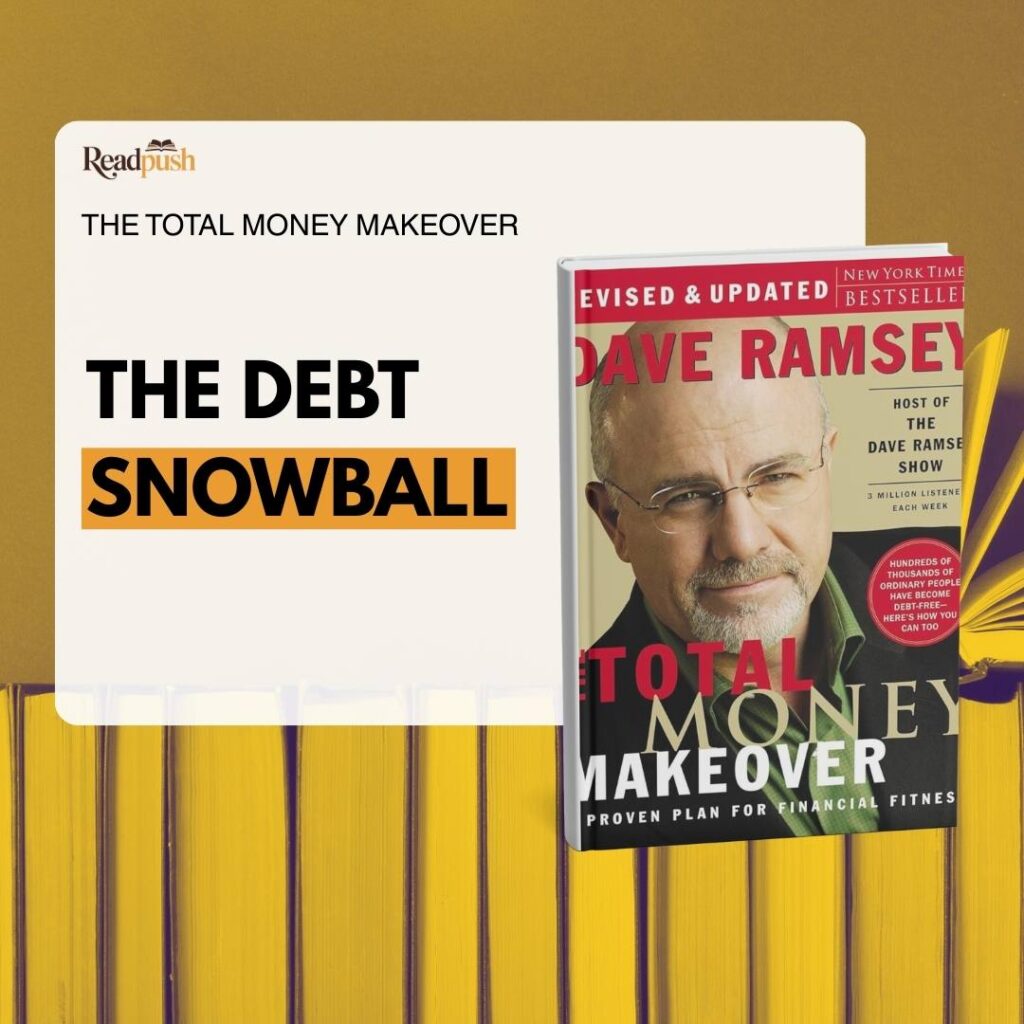
This insight comes from Dave Ramsey and his book The Total Money Makeover which explains why financial transformation is mostly about behavior. You can explore the full structure and main lessons in the complete book summary in the main Total Money Makeover pillar post.
Debt is not only a math problem. It is a motivation problem. Many people carry multiple debts and each one feels like a weight pressing on their chest. When you make minimum payments every month, the balances barely move. Your progress is so slow that you stop believing change is possible. You lose interest. You lose energy. You give up before you break through.
This mental fatigue is the real enemy. Without a system that creates small and visible progress, you fall back into old habits. You swipe the card again. You delay the plan. You accept stress as normal. Over time the financial cost grows but so does the emotional cost. Debt begins to shape how you think about yourself. You start believing things will never improve.
The debt snowball addresses this head on. It solves the hidden challenge that most systems ignore. You do not stay stuck because you lack intelligence. You stay stuck because you never feel a win. Without momentum your willpower drains. With momentum everything changes.
This idea becomes personal when you look at your own situation. Think of the smallest debt you owe and imagine it disappearing within weeks. That creates a spark. When you feel progress you want more progress. This shift is what makes the Debt Snowball so effective for real people in real life.
What the debt snowball means
The Debt Snowball is a simple method. You organize your debts from the smallest balance to the largest balance. You ignore interest rates. You pay minimums on everything except the smallest debt. Every extra dollar goes to that smallest balance until it disappears. Once it is gone, you take the payment you were using and roll it into the next smallest debt. One victory fuels the next and the snowball grows.
This may sound too basic at first. People often say they want to tackle the debt with the highest interest rate. On paper that is efficient. In real life it rarely works because motivation fades. The Debt Snowball works because it builds fire not figures. You create a habit of winning. You connect effort with reward. This fuels the discipline needed to finish the journey.
Why small wins matter
Humans crave quick progress. When something feels impossible we avoid it. The Debt Snowball makes progress visible. The first debt disappears fast. The next one goes a little slower yet you feel stronger because you now have more money to attack it. Every step builds confidence.
This approach is rooted in behavioral psychology. Wins trigger dopamine. Dopamine reinforces the behavior that produced the win. In this case the behavior is disciplined financial action. The more you win the more you want to keep going.
The logic behind it
The logic is simple. People do not fail in finance because of interest rates. They fail because they quit. The Debt Snowball reduces the pain of the journey and increases the reward. It builds a straight path toward progress that you can see, feel, and measure.
A simple analogy
Imagine pushing a car on a flat road. At first it barely moves. You push harder. Still nothing. Then suddenly it rolls an inch. That inch is everything. Once the car starts moving, you keep it moving because you can finally feel real progress. That inch is your smallest debt. The snowball begins the moment something finally moves.
Why this matters
The Debt Snowball matters because it produces real change for real people. When you look at your finances and realize you can eliminate a debt quickly, your confidence grows. Confidence influences decisions. You begin to believe you can build savings. You begin to believe you can invest. You begin to believe you can build a better life for yourself and your family.
For entrepreneurs and professionals this mindset shift is crucial. Money influences how you take risks and opportunities. A person who feels trapped by debt avoids new ideas and holds back on business growth. A person who feels financially strong is more strategic. They negotiate better. They think clearer. They pursue goals with more intention. They have space to breathe and plan.
The Debt Snowball is not simply a tool to clear balances. It is a method to restore belief in your ability to control your money. It influences your business decisions, your marketing strategies, and even your long term career goals. When your finances become organized, your mind becomes organized. That alone can transform your work and your life.
How to apply this
Applying the Debt Snowball is a straightforward process. The key is commitment and consistency.
Step one
List all your debts except your home. Do not order them by interest rate. Order them by smallest balance to largest balance.
Step two
Commit to paying minimum payments on every debt except the smallest one.
Step three
Direct every extra dollar of income to the smallest debt. This includes side income, bonuses, money from selling items at home, or any temporary savings from reducing expenses.
Step four
Once the smallest debt disappears, take all the money you were paying and roll it into the next smallest debt. You will feel the momentum increase because your payment power grows each time a debt is eliminated.
Step five
Repeat the process until every debt is cleared. Expect the journey to feel lighter with each step. The first debt will fall quickly. The second will feel possible. The third will speed up. By the time you reach your largest debt your payment force will be many times stronger than when you started.
Step six
Stay emotionally engaged. Celebrate each win. Share your progress with someone who supports your goals. This builds accountability.
If you want a deeper breakdown of each behavior step, you can explore the full method inside the complete Baby Steps guide which you can connect to from the Baby Steps walkthrough.
Expect the process to reshape how you think. You will feel your stress reduce. You will feel more in control. You will feel a sense of direction. That is the true power of the Debt Snowball.
Common mistakes to avoid
Many people attempt the Debt Snowball but stumble because of a few predictable mistakes.
Mistake one
Trying to modify the method. Some people want to mix it with the highest interest strategy or change the order. This removes the emotional benefit. Stick to the smallest balance first.
Mistake two
Failing to create extra cash flow. The snowball depends on intensity. If you keep spending the same way you always have, your progress will be slow and frustrating.
Mistake three
Stopping after the first win. Many people eliminate the smallest debt, feel relieved, and lose focus. The momentum must continue immediately.
Mistake four
Expecting instant results. The first step moves quickly, but the journey still requires time and discipline. Stay consistent.
Avoid these traps and the Debt Snowball becomes a powerful ally. It guides your energy and ensures you never lose direction.
The Debt Snowball does not stand alone inside The Total Money Makeover. It works best when paired with the starter emergency fund which protects you from unexpected expenses. It also prepares you for the full emergency fund which builds complete financial security. These ideas reinforce each other.
This concept works in tandem with the financial behavior principle explained in the article on the idea that personal finance is mostly behavior. Both ideas follow the same logic. Behavior drives change. You can explore that related article to understand why the Debt Snowball works so well in practice and why emotions often outperform math in personal finance.
The Debt Snowball can transform your financial life because it builds momentum. Momentum builds confidence. Confidence fuels consistency. When you combine these strengths you break free from the weight of debt and begin to create long term stability. The key takeaway is simple. Small wins lead to big change.
Take the first step today. List your debts. Commit to the smallest one. Build your first win. Your future self will thank you.
For more insights from The Total Money Makeover including the full breakdown of the Baby Steps and other powerful lessons, you can explore the complete book summary in the main guide.