
Picture reaching the end of a long workweek and realizing your paycheck covers everything but leaves you exhausted stressed and wondering if this is all there is. Many professionals achieve financial milestones yet feel trapped by obligations debt and expectations.
Financial independence offers a radical shift. It is not just about accumulating wealth; it is about freeing your most precious resource: your time. When your money works for you instead of you working for money, you gain the ability to pursue meaningful goals, invest in personal growth, and engage fully in life.
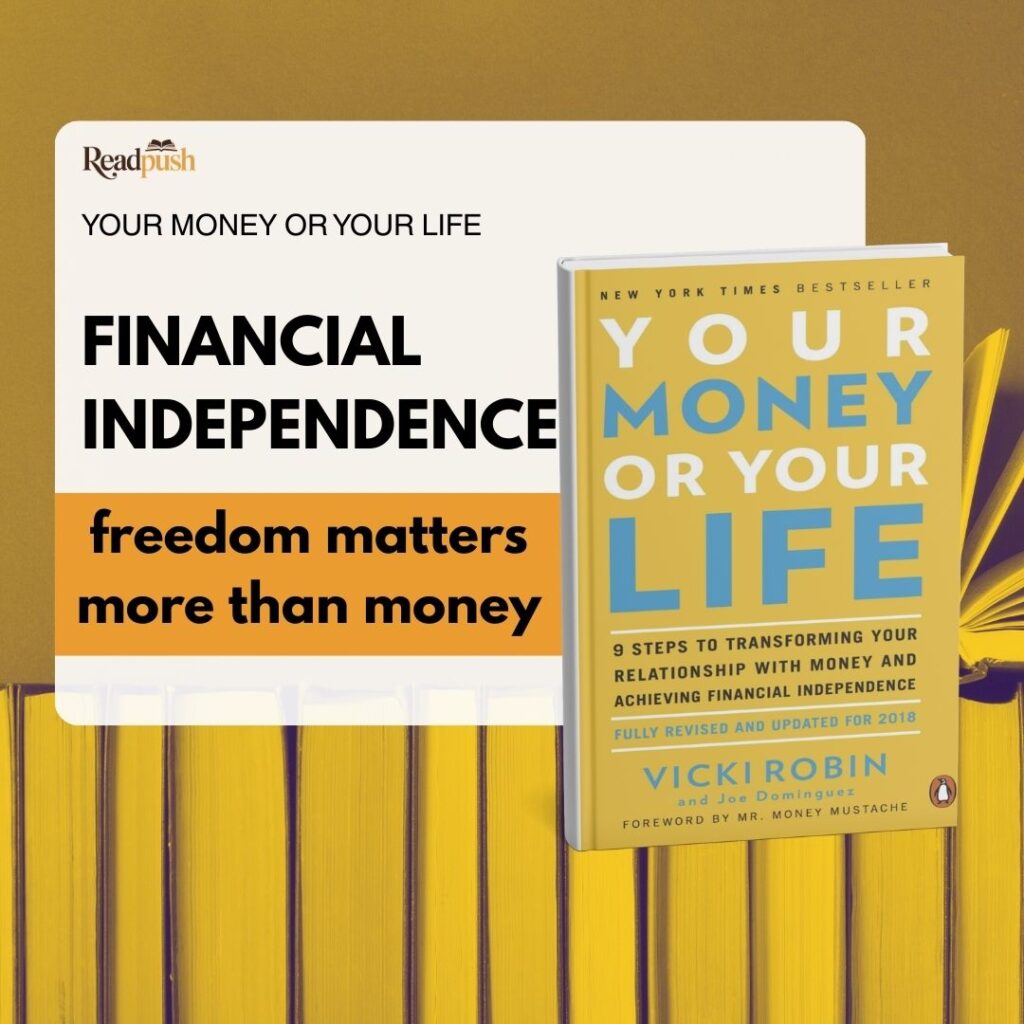
This insight comes from vicki robin and joe dominguez’s book your money or your life a comprehensive guide teaching how to liberate your life from financial stress and align spending with purpose read the full pillar post here.
Most people equate financial success with working harder and earning more. The reality is that money alone does not guarantee freedom or fulfillment. You can accumulate wealth while feeling trapped in your career relationships or daily routine.
Ignoring financial independence means trading the majority of your life for incremental income increases. Stress accumulates, personal goals are delayed, and life’s quality suffers. The pressure to keep up with bills societal expectations or lifestyle inflation consumes mental and emotional bandwidth.
This is especially challenging for entrepreneurs and ambitious professionals who may push themselves to extremes, believing financial gain is the ultimate reward. Without a framework to convert income into freedom the promise of money becomes a source of anxiety rather than empowerment.
Defining financial independence
Financial independence is the point where your assets or passive income cover your essential expenses. More importantly, it is freedom from financial pressure allowing you to choose how to spend your time without being driven by monetary necessity.
The crossover point
A key concept is the crossover point. This occurs when your investment income surpasses your monthly expenses. Achieving this milestone ensures that you can live comfortably without trading time for money. Monitoring this metric provides clarity and motivation as you plan your journey toward freedom.
Financial intelligence and integrity
Financial independence requires both intelligence and integrity. Financial intelligence means understanding your money objectively, including income, expenses, and future liabilities. Financial integrity ensures that your spending aligns with your values and life purpose. Together, they create a foundation for sustainable freedom.
Why wealth alone isn’t enough
Accumulating money without freedom often leads to stress, poor health, and missed opportunities. By redefining financial success as the ability to make conscious life choices, you shift focus from earning more to living better.
The bigger picture
Achieving financial independence enables interdependence contributing to society, supporting loved ones, and pursuing personal passions. Money becomes a tool, not a trap, and life decisions are guided by values rather than necessity.
Why this matters
Financial independence reshapes your mindset, allowing deliberate decision making about work, investments, and personal pursuits. It empowers you to pursue meaningful projects, take calculated risks, and reduce stress.
For entrepreneurs and marketers, this means focusing on work that drives impact rather than being chained to short term financial obligations. It creates space to innovate, learn, and grow, aligning career decisions with long term objectives.
By internalizing financial independence, you gain control over your lifestyle, career trajectory, and personal goals. It offers a sense of security and peace that wealth alone cannot provide.
How to apply this
- Assess your financial baseline
determine total income, expenses, and current savings. Identify gaps and opportunities for growth. - Reduce expenses and optimize spending
align spending with your values. Track every expense to reveal inefficiencies. - Increase income strategically
focus on high value work, side businesses, or investments that compound over time. - Calculate your crossover point
determine how much passive income is needed to cover essential expenses. - Invest for long term freedom
diversify into low cost index funds, real estate, or other vehicles that generate steady returns. - Regularly review progress
track milestones, adjust investments, and recalibrate spending habits. For a complete implementation guide on Life Energy and Money, see our step by step walkthrough here.
By following these steps, you reduce dependency on work for money, gain control over your time, and progressively approach a life defined by choice and purpose.
Common mistakes to avoid
- Focusing only on savings
saving is important, but without aligning spending to values, freedom remains limited. - Ignoring passive income
relying solely on earned income slows progress toward independence. - Neglecting regular review
life changes, and financial planning must adapt accordingly. - Overlooking lifestyle inflation
higher income often leads to higher spending. Avoid this to preserve financial independence.
Financial independence complements the concept of Life Energy and Money. Tracking life energy reveals how much work is required for each dollar and accelerates reaching your crossover point. These ideas also reinforce the principle of defining enough understanding satisfaction versus excess learn more about that here.
Financial independence is more than a number in your bank account. It is a framework for freedom, security, and deliberate life choices. The key takeaway is that money should work for you, not the other way around. Achieving this transforms your relationship with work, spending, and personal fulfillment.