
Most people never question what an asset or a liability truly is. They assume their house is an asset because it increases in value. They believe a new car shows success. They think a higher salary solves problems. Yet the majority of professionals continue to struggle financially even as their incomes rise. This is not a coincidence. It comes from using the wrong definitions and the wrong financial framework. According to data on personal spending habits, more than sixty percent of consumers live in a cycle where new income immediately becomes new expenses. They work harder, but their wealth does not grow.
This is why the distinction between assets and liabilities becomes one of the most important lessons in financial education. It explains why some people get richer even without high salaries and why others remain stuck despite impressive paychecks. When you understand this concept, you learn how to make money flow into your life instead of out of it. It becomes a turning point for anyone who wants long term stability.
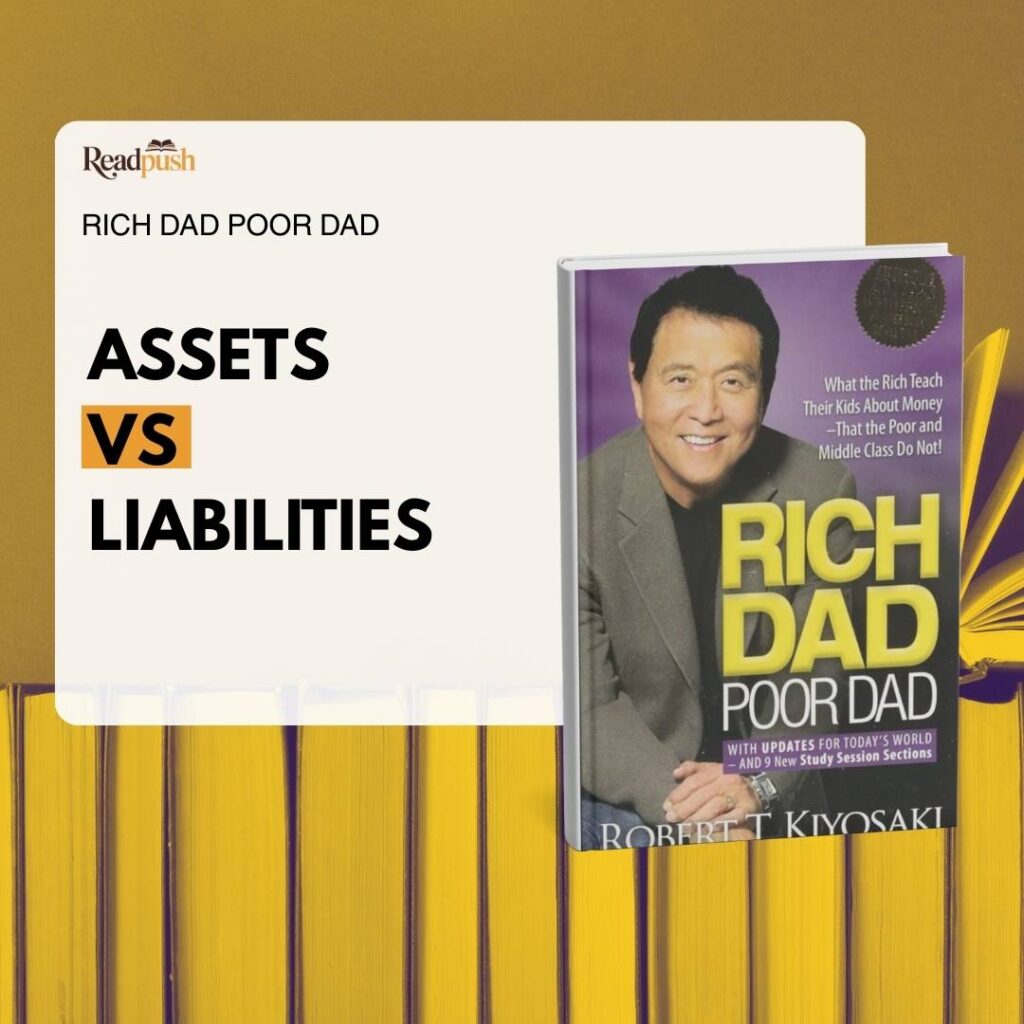
This insight comes from Robert Kiyosaki’s book Rich Dad Poor Dad. The core message of the book is that financial literacy matters more than income. If you want to explore all the lessons that form this philosophy, you can visit the rich dad poor dad book summary: the complete guide to wealth principles which breaks down every key idea in detail.
The problem in detail
The real problem is not that people do not earn enough. It is that they do not understand how money moves. They buy liabilities thinking they are assets. They upgrade their lifestyle when their income increases. They follow outdated financial advice that worked in a different era but not in today’s economy. As a result, they end up with large expenses, rising debt, and very few real assets.
This misunderstanding damages their long term financial stability. It creates constant pressure to keep working harder just to maintain the same level of comfort. It also blocks opportunities. When you believe your home or your car represents wealth, you feel less urgency to build real assets. You continue paying for things that take money out of your pocket every month. Over time, this drains your ability to invest, grow, or take meaningful risks.
The emotional side of this problem is even more challenging. People feel proud of their purchases because society encourages them to measure success through consumption. It becomes personal. They associate their identity with the things they own. This makes it harder to admit that some of these choices slow down their financial progress. Understanding assets and liabilities requires humility. It requires looking at money with honesty. Once you do, you gain the clarity needed to build a strong financial foundation.
The big idea explained
The simple definition that changes everything
Rich Dad defines assets and liabilities in the simplest way possible. An asset is something that puts money in your pocket. A liability is something that takes money out of your pocket. This clarity cuts through all confusing financial jargon. It allows anyone, regardless of education level, to understand their financial situation and build a strategy for improvement.
Why traditional definitions create confusion
Most people believe assets are things you own. This is what banks and accountants teach. The problem is that ownership alone does not create wealth. A house you live in, even if paid off, generates ongoing expenses. A new car loses value the moment you buy it. Expensive lifestyle upgrades may feel like assets but drain money month after month.
Traditional definitions hide these realities. Rich Dad’s definition exposes them. It shows you what truly strengthens your financial position.
How cash flow reveals the truth
Cash flow is the lifeline of financial health. Every financial decision should be analyzed through this lens. If something increases your cash flow, it is an asset. If it decreases your cash flow, it is a liability. This perspective helps you understand money in motion. It shifts you from thinking about price tags to thinking about long term impact.
For example, a rental property that generates more income than it costs is an asset. A personal residence that requires mortgage payments, taxes, and maintenance is a liability. A business that operates without your daily involvement is an asset. A business that only survives when you work every hour becomes a liability.
Why the middle class struggles
The middle class often buys liabilities believing they represent success. They purchase larger homes, better cars, and expensive conveniences. Their incomes rise, but so do their expenses. Taxes increase, debts expand, and the cycle continues. This keeps them trapped in the Rat Race. They never build enough assets to break free.
Why the rich get richer
The rich focus almost entirely on building assets. They invest in things that grow in value and produce cash. They reinvest profits into more assets. Over time, this creates exponential growth. Assets begin to pay for luxuries. Assets fund new investments. Assets provide stability during economic downturns. This is why wealth becomes easier once the asset column grows.
Why this matters
Understanding assets and liabilities matters because it gives you control over your financial path. It helps you make smarter decisions about spending, investing, and saving. It protects you from lifestyle inflation and from financial traps that drain your resources. It also gives you clarity. Once you understand your real financial picture, you can take action with confidence.
For entrepreneurs, this concept is vital. Many business owners create companies that depend entirely on their time. They end up with a job instead of an asset. Understanding this concept helps you design businesses with systems, automation, and cash flow. You build a company that supports your life rather than one that consumes it.
For professionals, the benefits are equally strong. You can continue your career while slowly shifting your resources toward assets. You can use your salary strategically instead of reacting to every new expense. You can build multiple income streams that support your goals and reduce risk. When you view money through the assets vs liabilities lens, every financial decision becomes more intentional.
How to apply this
1. Create a simple personal cash flow statement
List everything that puts money into your pocket and everything that takes money out. This gives you a clear view of your current financial health. It does not need to be complicated. You only need to understand the movement of money.
2. Identify your real assets
Look at your financial life honestly. Your home, car, gadgets, or lifestyle upgrades are usually liabilities. Real assets include rental properties, investments, side businesses, royalties, or any income generating tools.
3. Redirect money toward assets
Each month, commit a portion of your income to asset building. This can be small at first. The key is consistency. Over time you will build a foundation that supports your long term wealth.
4. Delay luxury purchases
Do not buy luxuries with earned income. Let your assets pay for them. This simple rule can change your entire financial trajectory. It helps you avoid lifestyle inflation and keeps you focused on long term growth.
5. Build financial literacy
Read books, study investing, and learn about cash flow. The more you understand money, the easier it becomes to grow it. If you want the full breakdown of all financial concepts mentioned in this idea, you can explore the Rich Dad Poor Dad Book Summary: The Complete Guide to Wealth Principles where each lesson is explained step by step.
6. Start a small asset on the side
You do not need large capital. Start with something manageable. A low cost online project, a dividend stock, or a small rental investment can be enough to begin. For a complete implementation guide on building an asset flow system, you can check our related how to guide that explains how to build assets from scratch.
Common mistakes to avoid
Mistake 1. thinking your home is an asset
Your home may be valuable, but it does not create income. It requires ongoing payments. Treat it as a liability and build real assets separately.
Mistake 2. confusing status with wealth
Many people buy things that look successful but weaken their financial stability. Wealth is not displayed. Wealth is built quietly through cash flowing assets.
Mistake 3. focusing on short term gains
Quick wins can be tempting. Real wealth grows through steady long term decisions. It requires patience and discipline.
Mistake 4. ignoring expenses
People often underestimate how much liabilities cost over time. Maintenance, interest, taxes, and insurance drain resources. Always calculate the long term impact.
Connection to other key ideas
The assets vs liabilities concept works perfectly with the idea that the rich don’t work for money. Understanding how assets generate cash helps you see why relying on a single paycheck creates limitations. If you want to explore how this principle influences work, income, and long term security, you can visit the article that explains why the rich don’t work for money.
It also connects to the concept of mind your own business which encourages you to build your asset column even while maintaining a job. Together these ideas form the core of the Rich Dad Poor Dad wealth philosophy.
Understanding the difference between assets and liabilities is a simple idea that creates a powerful shift. It helps you stop draining money and start building wealth. It shows you how to use your income strategically instead of emotionally. It reveals opportunities that were always available but hidden behind traditional definitions. When you apply this concept, you begin building a financial life based on growth, stability, and purpose.
If you want to explore more lessons from the book, including the psychology of money, the importance of financial education, and the habits that build long term wealth, you can continue with the Rich dad poor dad book summary: the complete guide to wealth principles.