Quick takeaways
- The asset vs liability distinction is the one genuinely useful framework in this book. It is simple, and most people have never really absorbed it.
- The “rich dad” is disputed. It may be a composite figure, it may be largely invented. The framework can stand on its own. It does not need the backstory.
- Read the first half carefully. Treat the tactical chapters as prompts for more research, not instructions. There is a big gap between “buy assets” and actually knowing how to do that safely.
- This book is a useful first disruption of assumptions that needed disrupting. It is not a complete financial education. Know the difference before you act on it.
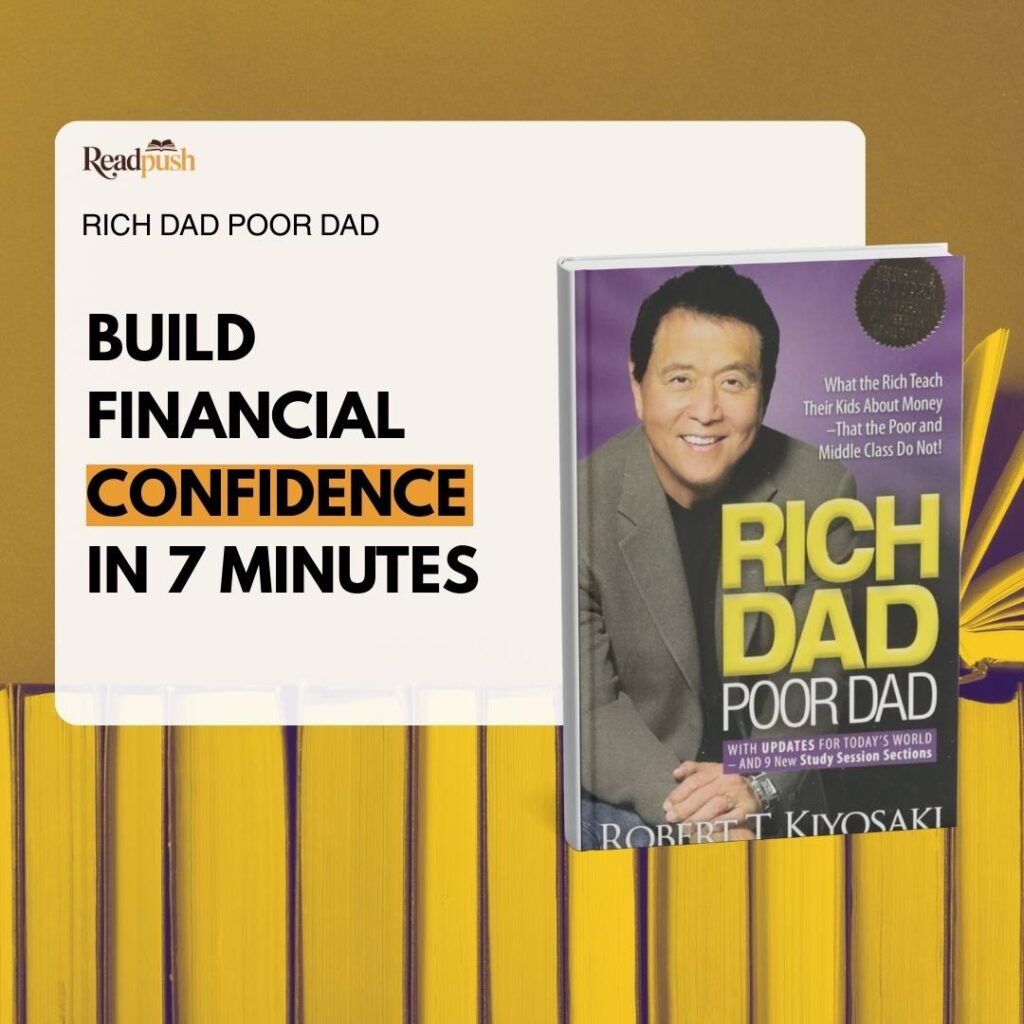
I read Rich Dad Poor Dad at 24, working a retail job, on a lunch break I could not afford to extend. I underlined most of it. I remember feeling like someone had finally told me the truth about money.
Kiyosaki’s book sold over 40 million copies for a reason. The ideas land hard when you have never been taught to think this way. But I have also watched people take certain chapters too literally and make bad bets as a result. So here is the summary, and the honest notes on where it holds up and where it does not.
What the book is actually about
Robert Kiyosaki structures Rich Dad Poor Dad around two father figures: his own father, a highly educated government employee who struggled financially his whole life, and his friend’s father, a man with little formal education who became one of Hawaii’s wealthiest people. One chased job security. The other chased assets.
The book’s argument is that the financial education most people receive, whether from school or family, programs them to be employees. Work hard, get a steady paycheck, buy a house, retire at 65. Kiyosaki says that is a trap. Not because hard work is bad, but because working for a paycheck keeps you dependent on someone else’s decisions about your financial future.
That core argument is solid. It was genuinely new to me in my mid-20s, and I think it is still worth hearing for anyone who grew up in a household where the financial plan was “get a good job.”
The ideas worth taking seriously
Assets versus liabilities. This is the framework the book is built on. An asset puts money in your pocket. A liability takes money out. By that definition, a car you are making payments on is a liability. A rental property that earns more than it costs to hold is an asset.
Simple? Yes. Obvious? Less so. Most people, when they think about wealth, think about income. Kiyosaki reframes it around ownership. The question is not how much you earn. It is what you own that keeps earning when you stop.
The rat race. The cycle he describes, earn more, spend more, earn more to cover the new spending, stay stuck anyway, is something I watched happen to people around me in my twenties. Raises that got absorbed by lifestyle before anyone noticed. It is not a moral failure. It is a design problem. Nobody explained the pattern to them.
Financial education as a foundation. This is where the book earns its longevity. Kiyosaki is not wrong that most schools teach you how to be an employee and nothing else. Understanding basic cash flow, the difference between passive and active income, how to read a simple balance sheet: these are not exotic skills. They are just not taught. The book argues they should be, and it is hard to disagree.
|
Rich Dad Poor Dad The three ideas worth taking seriously, and the honest verdict on each
|
||||||||||||||||||
Where I’d push back
The “rich dad” character is disputed. There is no clear evidence the mentor Kiyosaki describes existed as written. It may be composite, it may be largely invented. This matters because the book presents itself as a memoir of real lessons. If the framework is sound, it does not need a fictional backstory to hold it up. And the framework is sound enough to stand on its own.
More practically: the book is better at diagnosis than prescription. It is excellent at explaining why the average person’s financial wiring is working against them. It is less precise about what to actually do. “Buy assets” is true but not always actionable advice. Real estate investing, which Kiyosaki favors heavily, requires capital, local knowledge, and a risk tolerance that does not suit everyone. The book sometimes makes this sound easier than it is.
There is also a strain of “just take action” energy in the later chapters that I find a little thin. Action matters, obviously. But bad action taken confidently is still bad action. Some of the deals Kiyosaki describes approvingly would look different under scrutiny.
How to read it
Read the first half carefully. The mindset shift around assets versus liabilities, the rat race diagnosis, the case for financial literacy: those hold up. They are worth sitting with.
Treat the tactical chapters as prompts for further research, not instructions. If the real estate examples spark interest, that is useful. If you go out and buy a rental property because Kiyosaki made it sound straightforward, read three more books on that specific topic first.
If you want to see how Kiyosaki’s framework compares to a more behavior-focused approach to money, the comparison between Rich Dad Poor Dad and The Total Money Makeover is worth reading alongside this one. They are solving different problems, and knowing which problem you actually have changes which one to start with.
The honest bottom line: this is a book that changed how a lot of people, including me, thought about money for the first time. That is real value. It is not a complete financial education. It is a useful first disruption of some assumptions that needed disrupting. The Psychology of Money is the book I would pair it with for the behavioral layer that Kiyosaki mostly skips.
If you have not read it, read it. Just read it critically.
|
Honest verdict What holds up, what to question, and what to read next
|
||||||||||||||||||
What this idea changes in practice
The useful way to read this piece is not as a shortcut around the book, but as a way to decide what the book is really asking you to notice. Rich Dad Poor Dad is easy to reduce to a phrase. The phrase is helpful, but it is also where many readers stop too early.
The practical question is: what changes after you understand the idea? If the answer is only that you can repeat the concept in a meeting, the idea has not done much work yet. A good business or self-improvement book should change a decision, a habit, a conversation, or a way of measuring progress.
For this article, the change is usually smaller and more concrete than the headline suggests. You stop treating the concept as an inspirational lesson and start using it as a filter. It helps you decide what to ignore, what to inspect more closely, and where your current approach may be wasting effort.
That is where ReadPush readers get the most value. Not from another summary, and not from pretending the book is perfect. The value is in separating the durable idea from the noise around it.
Where readers often get it wrong
The common mistake is to treat the book’s central idea as universal. Most book ideas are not universal. They are conditional. They work better for some people, teams, markets, and seasons than others.
That does not make the idea weak. It makes it usable. Advice becomes more useful when you know its boundary. A habit system helps when your life has enough stability to support repetition. A strategy framework helps when the market conditions match the assumptions behind the framework. A finance lesson helps when it is applied to the right kind of risk, not every risk.
So the better reading is not, is this book right? The better reading is, where is this book right, and what would make it wrong for me? That question protects you from two bad habits: dismissing useful books because they are imperfect, and overusing famous books because they sound confident.
If you take only one thing from this article, take that discipline. Apply the idea where the conditions fit. Leave it alone where they do not.
How to apply the lesson without overcomplicating it
Start with one decision. Do not turn the book into a whole operating system on day one. That is how good ideas become heavy.
- Name the problem. What are you actually trying to improve: focus, growth, cash flow, consistency, leadership, decision quality, or something else?
- Pick the relevant principle. Choose one idea from the book that speaks directly to that problem.
- Define the test. What would look different after two weeks if the idea is working?
- Review the result. Keep what helped. Drop what added friction.
This keeps the lesson grounded. You are not trying to become the kind of person who has mastered the whole book. You are trying to make one part of your work or life less vague.
The same issue appears from another angle in Your Money or Your Life, where the money decision underneath the book becomes easier to see without turning the book into a slogan.
The same issue appears from another angle in The Startup Community Way, where the business trade-off the book is trying to clarify becomes easier to see without turning the book into a slogan.
The same issue appears from another angle in Atomic Habits, where the question of attention, habits, and what actually changes behaviour becomes easier to see without turning the book into a slogan.
A better final takeaway
The strongest books on ReadPush are rarely the ones that give the neatest answers. They are the ones that improve the quality of your next question. Rich Dad Poor Dad is worth returning to for that reason.
Ask what the idea reveals. Ask what it hides. Ask what it would look like in a normal week, with normal constraints, limited time, and imperfect follow-through. If the idea still helps there, it is probably worth keeping.
That is the standard. Not whether the book sounds impressive. Whether it survives contact with real life.