Quick takeaways
- Habits collapse not because you’re undisciplined, but because you’re relying on motivation instead of a system designed to carry you when motivation runs out.
- Habit stacking and the two-minute rule are the two most reliable frameworks for building routines that stick. They work on different mechanisms and are best used together.
- Your environment does most of the heavy lifting. Designing your surroundings is more effective than trying to make yourself want the habit more.
- Never try to build ten habits at once. One or two, made nearly effortless, compound into something real. Ten intentions just exhaust you.
If you’ve tried to build a habit and failed, I want to offer you something before we get into frameworks and steps: it probably wasn’t your fault.
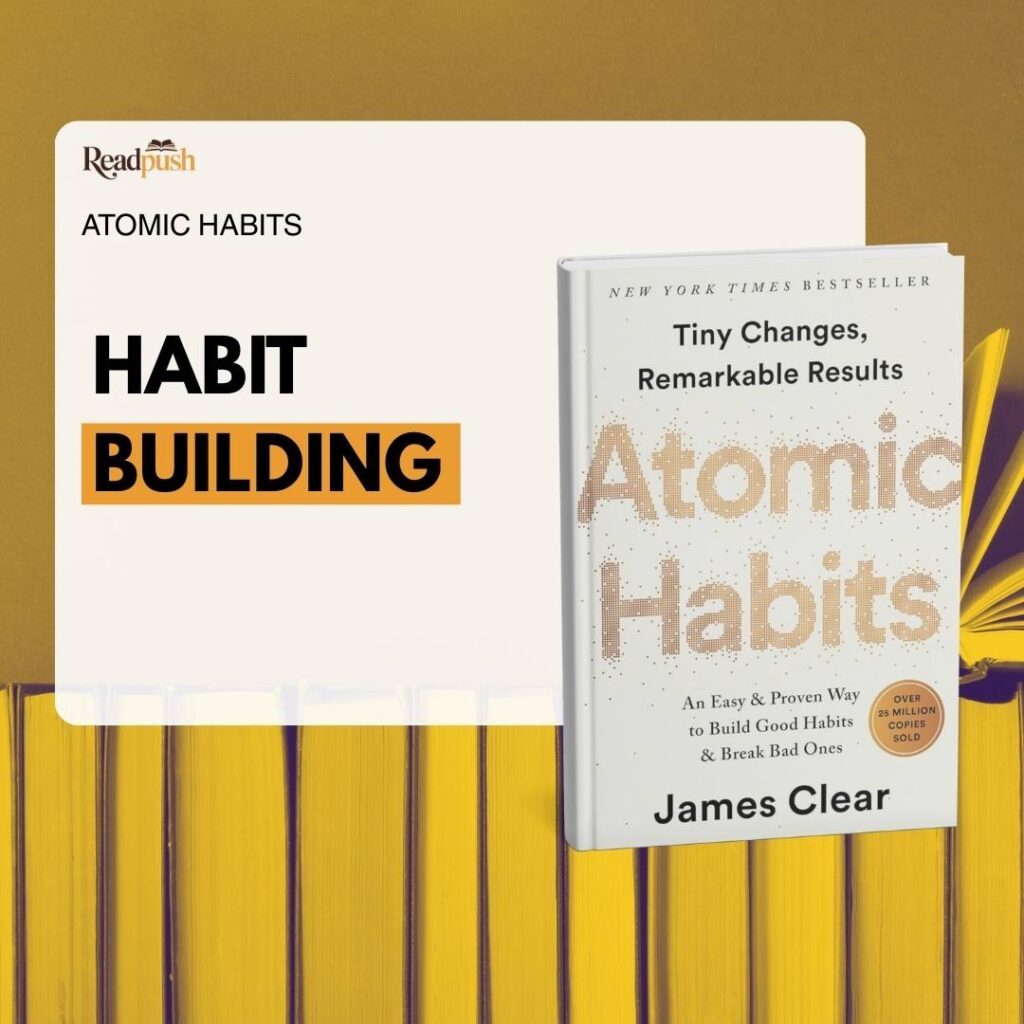
Not in a let-yourself-off-the-hook way. More in a practical, diagnostic way. Most habit advice is built around the idea that the problem is willpower, that you didn’t want it enough, didn’t try hard enough, didn’t have enough discipline. What James Clear argues in Atomic Habits, and what the research broadly supports, is that this is the wrong diagnosis. The problem isn’t you. It’s the system you were trying to operate without.
This guide walks through the frameworks that actually work, how to build an operational habit system from scratch, and what to watch for when it starts to wobble.
Why your last habit attempt broke down
Think about the last routine you tried to build. You probably started strong. Motivation was high. Then something happened, a late night, a hectic week, a small failure that felt like a bigger one, and the habit stopped. You blamed yourself. You told yourself you’d try again soon, with more resolve this time.
The problem with that story is that resolve is not a renewable resource. It depletes. And when it’s depleted, if there’s nothing else holding the behavior in place, the habit disappears. What you needed wasn’t more discipline. You needed a system that could carry the behavior on the days when discipline had nothing left to give.
Two frameworks from Atomic Habits are built precisely for this: habit stacking and the two-minute rule. They solve the problem from different angles, and together they form the backbone of a sustainable operational system.
|
Two frameworks, two different problems
|
Before you build anything: three things worth settling first
You don’t need a lot to start. But you do need a few things in place, or the system will wobble before it has a chance to hold.
The first is clarity about one habit. Not ten. Not a full morning routine overhaul. One behavior that, if it became automatic, would genuinely move something in your life. Write it down in a single sentence. Vague intentions don’t build systems. Specific behaviors do.
The second is a basic environment that supports the behavior. You don’t need to redesign your home. You need to make the habit visible and reduce the friction around starting it. A book left on your pillow. Running shoes placed by the door the night before. A notebook already open on your desk. Small physical cues do more work than strong intentions.
The third is realistic expectations about timeline. Clear doesn’t promise that habits form in 21 days. Research published in the European Journal of Social Psychology found the average time for a behavior to become automatic is closer to 66 days, with a wide range depending on the complexity of the habit and the person doing it. You’re not failing if it doesn’t feel effortless in week two. You’re just not done yet.
How to build the system, step by step
Start with one keystone habit. Something specific, repeatable, and genuinely meaningful to you. The more clearly you can articulate why this habit matters, the more it connects to the identity piece Clear writes about: you’re not just adding a behavior, you’re casting a vote for the kind of person you’re becoming.
Once you have it, apply the two-minute rule immediately. Take your intended habit and reduce it to its smallest honest version. Not a fake version you’ll never expand, but a real starting point that costs almost nothing. One page. One sentence. One push-up. One email. The resistance to starting is usually what kills habits before they form. When you make starting nearly frictionless, you remove that first and most dangerous obstacle.
Then stack it onto something you already do reliably. The formula is simple: “After I [existing habit], I will [new habit].” After I make coffee, I’ll read one page. After I sit down at my desk, I’ll write one sentence. After I close my laptop for the day, I’ll do five minutes of stretching. You’re borrowing the reliability of something your brain already trusts. The new habit gets to piggyback on that trust until it builds its own.
A note on environment
The most underrated part of habit building is environment design. Your behavior follows what’s visible and convenient far more than what you intend. Place a physical cue somewhere you’ll see it at the moment the habit should happen. The book on the pillow. The water bottle on the desk. These aren’t tricks. They’re the system doing its job so you don’t have to rely on remembering.
Track it. Not obsessively, but consistently. A simple mark on a calendar, a tick in a notebook, a colored dot on a wall chart. Visual evidence of streaks creates its own momentum. Clear calls this the “never miss twice” principle: missing once is human, missing twice is the start of a new (unwanted) pattern. Tracking makes it harder to miss twice without noticing.
Don’t expand the habit until it feels automatic, which usually takes ten days to two weeks of consistent repetition. Then increase it slightly. One page becomes three. One sentence becomes a paragraph. One email becomes three. The expansion should feel like a natural next step, not a challenge. If it feels like a challenge, you’ve expanded too soon.
Only after your first habit is genuinely stable should you consider adding a second. Use the same frameworks: two-minute version, stacked onto an existing behavior, physical cue in place. This is how a system builds: not from adding ten things at once, but from stacking reliable behaviors onto reliable behaviors until the whole structure holds itself up.
What to do when the habit breaks
It will break at some point. A disrupted week, an illness, travel, a particularly hard few days. This is not failure. It’s just what happens when you’re building something new into an already-complicated life.
When it breaks, the most important thing is to notice what made it difficult and adjust the system rather than adjusting your self-assessment. If the habit kept getting skipped in the evenings, move it to the morning. If the cue wasn’t visible enough, move it somewhere more obvious. If the habit had grown too large and started feeling effortful, shrink it back to the two-minute version and rebuild from there.
This is what Clear means by focusing on systems rather than outcomes. A system can be debugged and improved. A goal just sits there, either met or not. When your system breaks, you have information. Use it.
|
The habit build cycle
Timelines vary. The principle doesn’t: stability before expansion, always. |
Common mistakes that break the system before it starts
Starting too large. The most common reason early habit attempts collapse is that people begin with the full version of the habit instead of the two-minute version. A full workout when you haven’t exercised in months. A 1,000-word writing session when you haven’t written in years. The starting effort exceeds the available energy, and the habit fails. Start with the smallest honest version. You can expand it. You can’t recover from quitting.
Building multiple habits at once. This divides your attention and weakens each habit before it has time to stabilize. One reliable habit is worth more than five fragile ones. Pick the one that matters most and build that first.
Ignoring environment design. Relying on memory to trigger a habit is much less reliable than placing a physical cue in the right place. If you have to remember to do it, you’ll often forget. If the cue is in front of you at the right moment, the habit becomes much harder to skip.
Treating missed days as failure. Missing one day is normal. Missing two is the beginning of a new pattern. The response to missing is not self-blame it’s asking what made the habit hard that day and adjusting the system to make it easier next time. That question is more useful than any amount of resolve.
Worth remembering
A system that breaks and gets repaired is still a system. That’s actually how they work. The goal isn’t a perfect streak. It’s a process you keep returning to, and that you gradually make easier to return to each time it breaks.
The same issue appears from another angle in How to Build Money Plan You Can, where the money decision underneath the book becomes easier to see without turning the book into a slogan.
The same issue appears from another angle in How to Build Habits That Stick, where the question of attention, habits, and what actually changes behaviour becomes easier to see without turning the book into a slogan.
The same issue appears from another angle in Productivity books for entrepreneurs who cannot follow, where the question of attention, habits, and what actually changes behaviour becomes easier to see without turning the book into a slogan.
The identity piece: why the system compounds over time
Clear’s deepest argument in Atomic Habits isn’t really about habits. It’s about identity. Every time you follow through on the small version of your habit, you’re creating evidence that you’re the kind of person who does this. Not because you decided to be. Because you did it, and then did it again.
This matters because it changes what the habit feels like to skip. Once the identity has started to form, skipping the habit feels slightly wrong, slightly out of character, in the same way that you’d feel odd eating meat if you’d been vegetarian for two years. The habit has become part of how you see yourself. That’s a very different kind of staying power than willpower or motivation, both of which fluctuate. Identity, once built through enough evidence, is much more stable.
You don’t need to believe any of this before you start. You just need to start with the small version, stack it, place the cue, and let the evidence accumulate. The belief follows the behavior, not the other way around.
Start with one habit. Make it almost embarrassingly small. Attach it to something you already do. Put a cue somewhere you’ll see it. Then do it again tomorrow.
That’s the whole system. Everything else is expansion.