|
Quick takeaways
|
If you’re going through something hard right now, you’ve probably had the thought: I just need to get to the other side of this. You’ve set a quiet deadline. By summer. After the next round of results. Once the kids are settled. You’ve told yourself that if you can just get through to that point, things will ease. And when that point comes and goes without the relief you were expecting, something deflates. You set another date. The cycle continues.
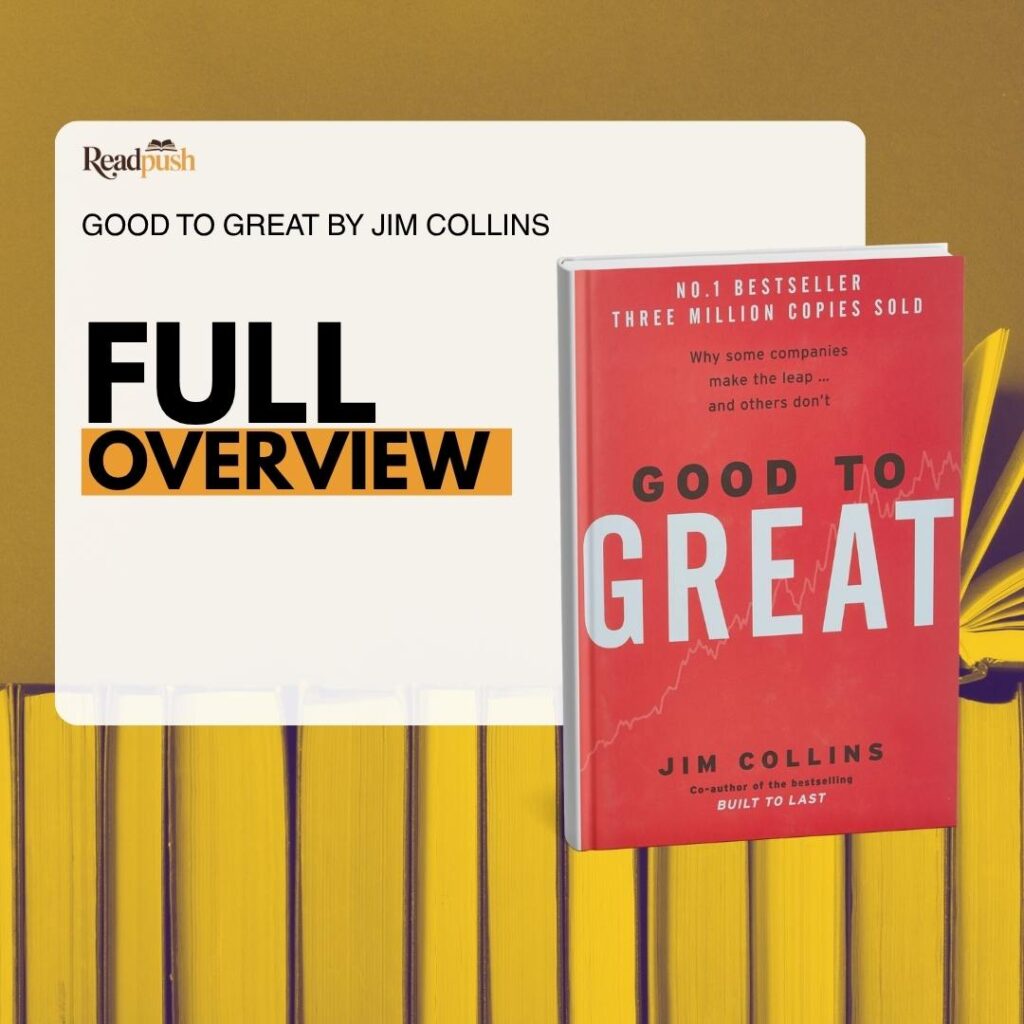
Jim Collins gave that pattern a name in Good to Great. He called it the Stockdale Paradox, after a man who had lived the most extreme version of it imaginable, and who came out the other side with something worth listening to. I find myself returning to this concept more than almost anything else I’ve read, because it names something I see repeatedly, in clients, in the people around me, and honestly in myself.
The man behind the concept
Admiral James Stockdale was the highest-ranking American military officer held prisoner at the “Hanoi Hilton” during the Vietnam War. Shot down in 1965, he spent seven and a half years in captivity. Four of those years were in solitary confinement. He was tortured more than twenty times. He had no idea when, or whether, he would be released.
When Collins interviewed him years later and asked how he had survived it, Stockdale was straightforward. He never stopped believing he would get out. He held to that without bending. But then Collins asked the follow-up question that changed things: who didn’t make it?
“The optimists,” Stockdale said. The ones who told themselves they’d be home by Christmas. Then Easter. Then Thanksgiving. Then Christmas again. They died, he said, of a broken heart. He had watched it happen in real time, standing next to them.
What’s worth noticing is that he wasn’t describing weak people. He was describing a specific structural flaw in how they were holding their hope.
What the paradox actually means
The Stockdale Paradox is the discipline of holding two things at the same time, without letting either one cancel the other out. You see your situation clearly, including the parts that are difficult and uncertain and unresolved. And you keep the faith that you will navigate it. Not by a date. Not under a set of circumstances you’ve decided on in advance. Just eventually, if you keep going.
It is not optimism, at least not in the way the word is usually used. And it’s not stoicism in the colloquial sense either, the stone-faced-and-uncomplaining version. It’s something that requires more from you than either of those, because it refuses to let you resolve the tension by collapsing into one side or the other.
|
Worth sitting with The mind wants to resolve discomfort. It wants to pick a side: either things will be fine, or things are hopeless. The paradox asks you not to do that. It asks you to stay in the harder, truer middle: this is genuinely difficult, and I will come through it. |
Why deadline-based hope is so fragile
We’ve absorbed the idea that optimism is straightforwardly good. And in some ways it is. But optimism that has a built-in expiry date is a different animal. When you tell yourself you’ll be through the hard thing by a specific point, you’re making a bet that reality has no obligation to honour. And when reality doesn’t honour it, the crash isn’t just disappointment. It’s the collapse of the structure that was holding you up.
In my experience with clients, this pattern shows up less dramatically than it did in the Hanoi Hilton, but with recognisable shape. The person who’s been job-searching for six months and is certain something will come through by the end of the quarter. The one in a difficult relationship who keeps thinking it’ll settle down after the next big stressor passes. The person managing a health situation who has decided, quietly, that if they just get through the next appointment, they’ll feel more in control. When the deadline passes without delivering, the hope it was carrying has nowhere to go.
What makes this hard to see from the inside is that setting a deadline feels like resilience. It feels like you’re managing yourself, keeping yourself going. But it has a load-bearing quality that makes it brittle. Remove the deadline and the whole thing can come down.
|
Three ways of holding difficulty
|
Viktor Frankl noticed the same thing in Auschwitz
Collins named the concept after Stockdale, but the observation isn’t new. Psychiatrist Viktor Frankl documented almost exactly the same pattern in Man’s Search for Meaning, based on what he witnessed in the Nazi concentration camps two decades earlier. He described a wave of deaths among prisoners around Christmas 1944, men who had told themselves they’d be liberated by the new year. When liberation didn’t come, they died, not from starvation or violence, but from the failure of the thing that had been keeping them alive.
Frankl called his response to this “tragic optimism”: the capacity to hold hope alongside, not in place of, the full weight of what is happening. You don’t deny the suffering. You don’t pretend the facts are otherwise. You simply refuse to let them be the final word. It’s a kind of faith that doesn’t need certainty about how things end, only certainty about your own capacity to keep going through them.
The fact that Frankl and Stockdale arrived at essentially the same conclusion, in different countries, different decades, different forms of captivity, with no knowledge of each other, suggests this isn’t a management insight that can go out of fashion. It’s something closer to a law of how humans hold difficulty. Stockdale had also spent years with the Stoic philosopher Epictetus, whose writing he had committed to memory during captivity. The Stoics drew the same line: you cannot control when the war ends, but you can control your response to the day you’re in. That thread runs through all of it.
|
If you want to go deeper Frankl’s Man’s Search for Meaning is shorter than people expect and more readable than the title suggests. The first half documents his experience in the camps. The second lays out the psychological framework he built from it. If you’ve only encountered it through summaries, reading the original is worth the hour or two. |
This isn’t only for boardrooms
Almost every piece written about the Stockdale Paradox frames it as a leadership lesson. That’s a reasonable reading, but it misses where most of us will actually need it. If this concept only lives in executive coaching, a lot of people who could use it will never find it there.
Think about what it looks like in a career that’s stalled. You’ve been in a role that stopped growing a year ago, maybe two. The honest read is that something needs to change and you don’t know yet what it is. The part of you that copes by minimising says it’ll sort itself out. The part that catastrophises says you’ve left it too long, there’s no path forward. The Stockdale approach doesn’t offer a third story. It asks you to hold the first two truths at the same time: this is genuinely stuck, and I will find the next thing. Not by a date. Just eventually, if you keep looking.
Or a health situation that has made your life different in ways you didn’t choose. The instinct is often to skip forward, to reassure everyone including yourself that you’re fine, to focus on the point when you’ll be better. That instinct is understandable, and it often means you’re not dealing with what’s actually in front of you. The Stockdale Paradox doesn’t ask you to perform strength. It asks you to look clearly at what’s true right now while refusing to give up on your ability to navigate it.
Relationships go through this too. The marriage that has been uncertain for months. The friendship that’s fraying. The family dynamic that has been quietly hard for years. All of these have their own version of the Christmas-Easter trap: waiting for the thing to resolve by a moment that keeps arriving without resolution, while not quite engaging with what’s actually present.
|
Where you might recognise this pattern
|
How this is different from toxic positivity
They can sound similar from the outside. Both involve keeping some form of hope alive. But they’re asking different things of you, and the difference matters.
Toxic positivity says your feelings are the problem. The hard thing is hard because you haven’t adopted the right mindset yet. If you could just think about it differently, or be more grateful, or raise your vibration (whatever that means), the difficulty would shift. The practical effect of this is that people feel broken for struggling. I should be over this by now. The struggle becomes evidence of a character failing rather than a response to a genuinely difficult situation.
The Stockdale Paradox says the opposite. Your feelings aren’t the problem. They’re accurate information about your situation. Seeing your circumstances clearly, including the parts that are frightening and unresolved, is not a failure of attitude. It’s the honest starting point. The paradox doesn’t ask you to feel better about the difficult thing. It asks you to hold the difficult thing alongside the belief that you’ll find your way through. The feelings stay. The faith stays alongside them.
|
Easy to confuse Collins was explicit: the optimists died. The Stockdale Paradox is not an argument for positive thinking. Staying upbeat while refusing to look at the facts isn’t the lesson. It’s the trap the paradox is warning against. |
Four small things that actually help
The mind wants to resolve the tension rather than sit in it. That pull is real, and it’s worth knowing what pushes back against it.
Write down what you actually know. Not the fears you’re carrying about what might happen. Not the hopes you’ve constructed about what should. The facts as they stand right now: what do you know, what don’t you know yet, what is genuinely uncertain. Getting it out of your head and onto paper separates the situation from the story you’re telling yourself about it. The situation usually turns out to be more manageable than the story, not because anything has changed, but because it’s no longer abstract.
Separate what you hope for from when you hope for it. The faith itself doesn’t require a date. You can believe you’ll navigate this without deciding when. Most of the fragility in deadline-based hope lives in the date, not the belief. Take the date out and see what remains.
Notice the projection you’re running. When you catch yourself rehearsing a scenario, ask whether you’re projecting rescue (“it’ll sort out by X”) or catastrophe (“it’ll never work”). Both are projections, not the situation. The situation is what you actually have to work with, today.
Find one thing that’s genuinely in your control right now. Not a strategy. Not a plan to fix everything. One small action that belongs to the day you’re in. Stockdale read Epictetus every night in solitary confinement. It wasn’t an escape plan. It was a way of staying present in an uncontrollable situation without giving up on the larger outcome. That’s available to all of us, in smaller doses, every day.
Common misconceptions about the Stockdale Paradox
Misconception: “It’s just about staying positive.” Collins was explicit that the men who maintained unrealistic optimism were the ones who didn’t survive. Staying upbeat in the face of hard facts isn’t the lesson. Staying honest while keeping faith is the harder, more useful thing.
Misconception: “Accepting the brutal facts means accepting they won’t change.” Stockdale never doubted he would get out. Accepting how things are right now is different from deciding how things will always be. The first is realism. The second is a different kind of deadline thinking.
Misconception: “This only applies to extreme situations like captivity.” The insight is clearest in extreme circumstances because everything is stripped down. But the mechanism is the same in much more ordinary difficulty. The Christmas-Easter cycle operates in careers, relationships, creative work, health, grief. The scale is different; the structure is identical.
Misconception: “Confronting hard facts means dwelling on them.” Confronting and ruminating are different things. Confronting means seeing clearly, once, without flinching away. Rumination means returning to it repeatedly without moving. The Stockdale Paradox is an invitation to look honestly, and then keep going. Not to keep looking.
The same issue appears from another angle in Books that changed how you work, where the larger question the book raises becomes easier to see without turning the book into a slogan.
The same issue appears from another angle in Self Compassion when your inner critic has, where the emotional pattern the book is trying to name becomes easier to see without turning the book into a slogan.
The same issue appears from another angle in The Anxious Generation and the guilt parents, where the larger question the book raises becomes easier to see without turning the book into a slogan.
What this is actually asking of you
Nobody said this was comfortable. The paradox doesn’t promise things will be fine, and it doesn’t let you off the hook of seeing how difficult they are. What it offers is quieter than that: you don’t have to choose between honesty and hope. Both can be true at the same time, without either one cancelling the other out.
Most people in hard seasons aren’t failing to be optimistic enough. They’re failing to be honest enough about how difficult things actually are. That honesty isn’t defeat. It’s what makes sustainable resilience possible, because it doesn’t depend on circumstances turning out a certain way by a certain moment.
Stockdale spent seven and a half years as a prisoner and came out saying he wouldn’t trade the experience. Frankl survived Auschwitz and built a whole theory of meaning from it. Neither of them pretended it wasn’t terrible. That’s the whole point. You don’t have to pretend either. You can read Collins’s original account of the interview on the Jim Collins website, where he tells it in full, in Stockdale’s own words.
Read slowly. Let it land where it needs to.